
World
C-17 Globemaster III: Unmatched Airlift Capability After 34 Years

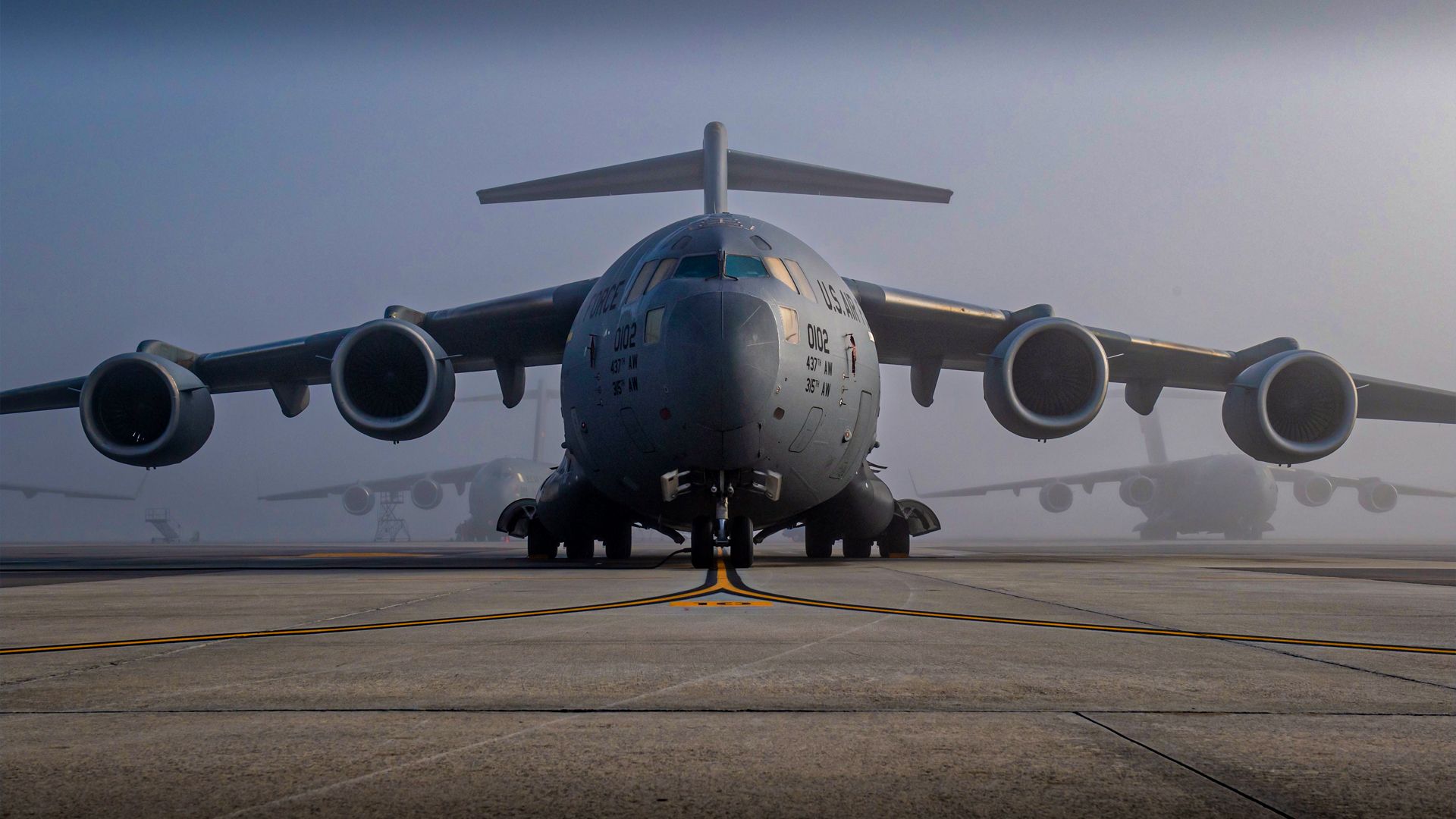
The C-17 Globemaster III continues to stand out as a leading aircraft in strategic airlift operations, even after more than three decades since its first flight in 1989. Originally developed by McDonnell Douglas in Long Beach, California, the C-17 has evolved from a troubled program into one of the most successful tactical airlift platforms globally. Despite advancements in aviation technology, no other aircraft currently matches its exceptional blend of performance and versatility.
The C-17 is not only integral to the United States Air Force (USAF) but also serves numerous air forces worldwide. Its unique capabilities ensure that it will remain in service until at least 2075, marking nearly 80 years since its introduction. As the C-17 celebrates over thirty years of active duty, it is essential to explore its enduring relevance and how it compares to newer aircraft as we move into 2025.
The C-17’s Unique Position in 2025
As of 2025, the C-17 Globemaster III holds a distinctive position in the airlift sector, with no direct competitor able to replicate its “hybrid” profile of substantial strategic payload and tactical agility. While aircraft such as the Airbus A400M and the Xi’an Y-20 have emerged since the C-17’s military debut, they do not offer the same comprehensive capabilities.
The A400M, which first took flight in 2009, operates with turboprop engines and can achieve higher cruise speeds than the C-17 under certain conditions. The Y-20, which made its debut in 2013, is visually reminiscent of the C-17 but falls short in operational performance. The C-17’s unique ability to conduct both long-range strategic missions and short-range tactical operations in a single mission remains unparalleled.
The USAF is actively investing in the C-17 fleet, consisting of over 275 aircraft, by implementing significant sustainment contracts and technology upgrades. A major contract modification with Boeing in 2025 extends support through 2027 and includes foreign military sales, ensuring the C-17 maintains its operational readiness.
Comparative Performance and Capabilities
The C-17’s primary advantage lies in its dual capability to carry out long-range strategic missions and short-range tactical deliveries. It can fly intercontinental distances and land directly at small, forward-operating bases, which eliminates the need for intermediate cargo transfers. Notably, the C-17 can land on runways as short as 3,500 feet (approximately 1 km) and only 90 feet wide, including unpaved fields.
Here is a quick comparison of the C-17 and its closest competitors:
– **Airbus A400M Atlas**: Offers a payload of 37–40 metric tons, less than half of the C-17’s maximum capacity of 77 tons. While it can operate from shorter airstrips, it lacks the C-17’s overall versatility.
– **Xi’an Y-20**: Estimated payload is between 60 and 66 tons, making it a closer competitor to the C-17, although still marginally less capable.
– **Lockheed C-5M Super Galaxy**: Provides a greater raw payload of 135 tons, but cannot land on short or austere runways like the C-17.
– **Ilyushin Il-76**: A rugged strategic lifter that matches the C-17’s airfield performance but has a narrower cargo bay, limiting its capacity for oversized Western vehicles.
– **Kawasaki C-2 / Embraer C-390**: These modern jet-powered tactical lifters exhibit agility similar to the C-17 but significantly lower payload capacities.
The C-17’s maximum payload of 170,900 pounds (approximately 77.5 tons) enables it to transport heavy military equipment, including the M1 Abrams main battle tank (weighing 70 tons), directly to forward airfields. Its cargo hold can also be rapidly reconfigured to accommodate up to 102 paratroopers, 36 litter patients for medical evacuations, or oversized helicopters like the CH-47 Chinook.
The design and engineering of the C-17 contribute significantly to its sustained effectiveness. With features like in-flight thrust reversers, the aircraft can perform steep tactical descents and execute maneuvers that are otherwise challenging for larger planes. Its powered lift system allows for stable approaches at low speeds, facilitating landings on short runways with full payloads.
The enduring legacy of the C-17 Globemaster III highlights its unmatched capabilities in the realm of military airlift.
A Bright Future for Airlift
The C-17’s history reflects a remarkable evolution from a near-canceled program facing substantial financial losses to becoming a cornerstone of global airlift. Initially conceived as a replacement for the C-141 Starlifter, the C-17 faced significant challenges but ultimately saw success with the establishment of the first operational squadron in 1995.
As the USAF looks to the future, the development of the Next-Generation Airlifter (NGAL) aims to create a single platform incorporating the massive volume of the C-5 and the short-field agility of the C-17 by the late 2030s. Until that vision is realized, the C-17 will continue to serve as an essential and uniquely capable asset within the USAF fleet, reinforcing its position as a leader in military airlift operations.

Meta Plans Major Layoffs as AI Costs Surge

Alberta’s Referendum Could Pave Way for U.S. Statehood

Minooka District 201 Plans Enhanced Bilingual Support for Students

Canmore Approves Multiple Development Permits for New Projects

Remembering Bradly Castillo Shearsmith: A Life of Friendship and Joy

BIS Urges Watchdogs to Integrate Synthetic Risk Transfers in Stress Tests

Teva Transforms: Shifting Focus from Generics to Branded Success

Apple Launches AirPods Max 2 with Enhanced Audio Features

Ontario Ends Funding for Seven Supervised Injection Sites

Toyoake City Proposes Daily Two-Hour Smartphone Use Limit

Pedestrian Fatally Injured in Esquimalt Collision on August 14

B.C. Review Reveals Urgent Need for Rare-Disease Drug Reforms

Dark Adventure Game “Bye Sweet Carole” Set for October Release

Konami Revives Iconic Metal Gear Solid Delta Ahead of Release

Victoria’s Pop-Up Shop Shines Light on B.C.’s Wolf Cull

Jimmy Lai’s Defense Challenges Charges Under National Security Law

Snapmaker U1 Color 3D Printer Redefines Speed and Sustainability

Apple Expands Self-Service Repair Program to Canada
-
 Science12 months ago
Toyoake City Proposes Daily Two-Hour Smartphone Use Limit
-
 Top Stories12 months ago
Pedestrian Fatally Injured in Esquimalt Collision on August 14
-
 Health12 months ago
B.C. Review Reveals Urgent Need for Rare-Disease Drug Reforms
-
 Technology11 months ago
Dark Adventure Game “Bye Sweet Carole” Set for October Release
-
 Technology12 months ago
Konami Revives Iconic Metal Gear Solid Delta Ahead of Release
-
 Lifestyle12 months ago
Victoria’s Pop-Up Shop Shines Light on B.C.’s Wolf Cull
-
 World12 months ago
Jimmy Lai’s Defense Challenges Charges Under National Security Law
-
 Technology12 months ago
Snapmaker U1 Color 3D Printer Redefines Speed and Sustainability
-
 Technology12 months ago
Apple Expands Self-Service Repair Program to Canada
-

 Technology12 months ago
AION Folding Knife: Redefining EDC Design with Premium Materials
-

 Technology12 months ago
Solve Today’s Wordle Challenge: Hints and Answer for August 19
-

 Business12 months ago
Gordon Murray Automotive Unveils S1 LM and Le Mans GTR at Monterey