
World
India’s Budget Targets Infrastructure Growth Amid Global Challenges

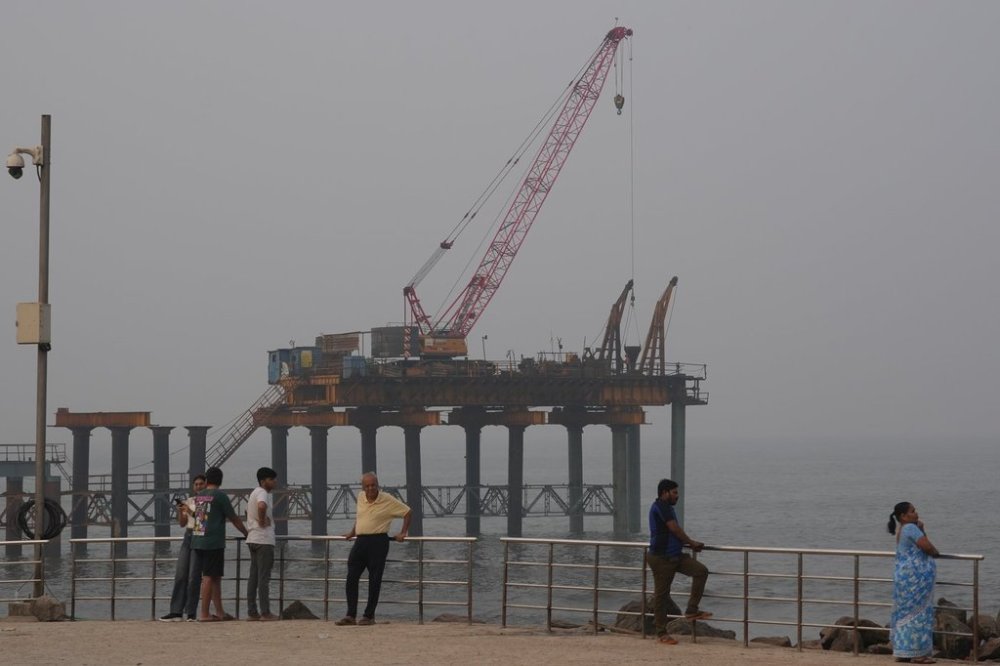
India’s government unveiled its annual budget on Sunday, aiming to bolster infrastructure spending while committing to fiscal discipline. Prime Minister Narendra Modi‘s administration presented the budget in Parliament, seeking to sustain economic growth in the face of fluctuating financial markets and trade uncertainties.
In her address, Finance Minister Nirmala Sitharaman outlined plans to increase investments in infrastructure and domestic manufacturing, all while adhering to a framework of fiscal prudence. The budget for the upcoming 2026-27 financial year, commencing on April 1, arrives amid challenges faced by major economies, including high interest rates, geopolitical tensions, and a rise in protectionist policies that have affected global trade.
According to the finance ministry’s economic survey, which was released prior to the budget announcement, India is projected to experience economic growth between 6.8% and 7.2% in the next fiscal year, driven by increasing domestic consumption. Despite plans for enhanced spending, the government reiterated its commitment to fiscal consolidation, aiming for a deficit of 4.3% of GDP, a slight decrease from the 4.4%% deficit anticipated for the current fiscal year ending in March.
Focus on Structural Reforms and Strategic Investments
Sitharaman emphasized the absence of populist measures in this budget, stating that New Delhi’s strategy is to build resilience domestically while strengthening its position in the global supply chain. This approach marks a shift from the previous year’s budget, which featured substantial tax cuts aimed at the salaried middle class following Modi’s significant electoral victory.
“India will continue to take confident steps towards Viksit Bharat (Developed India), balancing ambition with inclusion,” Sitharaman stated. The government plans to implement structural reforms, particularly in the manufacturing sector, while also significantly investing in niche industries such as biopharma and artificial intelligence.
The budget allocates 12.2 trillion rupees (approximately $133 billion) for capital expenditure, primarily targeting infrastructure, an increase from 11.2 trillion rupees in the previous year. This commitment to public investment comes at a time when many advanced economies are retracting their fiscal spending due to rising debt levels and tighter monetary policies.
Enhancing Manufacturing and Financial Markets
To reduce import dependency, the government plans to establish three chemical production parks and enhance manufacturing across seven strategic sectors, including biopharma, semiconductor production, and electronics components. Addressing the global concern regarding job creation in manufacturing, the budget also introduces additional credit support and a growth fund aimed at micro, small, and medium enterprises.
Sitharaman highlighted measures intended to deepen India’s financial markets, including initiatives to strengthen the corporate bond market and relax certain regulations for foreign investors. As global capital becomes increasingly selective in a high-interest environment, emerging markets, including India, are vying for stable, long-term investments.
“I propose a comprehensive review of the Foreign Exchange Management (Non-debt Instruments) Rules to create a more contemporary, user-friendly framework for foreign investments,” she stated, aligning with India’s evolving economic priorities.
The budget also outlines plans to promote environmentally sustainable travel through the development of seven high-speed rail corridors linking major cities such as Mumbai and Bengaluru. Additionally, new dedicated freight corridors will be established, along with operationalizing 20 new waterways over the next five years, enhancing cargo movement and promoting mining, processing, research, and manufacturing of rare earth materials.
In her address, Sitharaman reiterated the government’s commitment to developing ecologically sustainable tourism trails in mountainous and coastal regions, indicating a holistic approach to growth that addresses both economic and environmental concerns.
Overall, India’s budget reflects a strategic focus on infrastructure and manufacturing while maintaining a disciplined fiscal approach amidst a challenging global landscape.

Meta Plans Major Layoffs as AI Costs Surge

Alberta’s Referendum Could Pave Way for U.S. Statehood

Minooka District 201 Plans Enhanced Bilingual Support for Students

Canmore Approves Multiple Development Permits for New Projects

Remembering Bradly Castillo Shearsmith: A Life of Friendship and Joy

BIS Urges Watchdogs to Integrate Synthetic Risk Transfers in Stress Tests

Teva Transforms: Shifting Focus from Generics to Branded Success

Apple Launches AirPods Max 2 with Enhanced Audio Features

Ontario Ends Funding for Seven Supervised Injection Sites

Toyoake City Proposes Daily Two-Hour Smartphone Use Limit

Pedestrian Fatally Injured in Esquimalt Collision on August 14

B.C. Review Reveals Urgent Need for Rare-Disease Drug Reforms

Dark Adventure Game “Bye Sweet Carole” Set for October Release

Konami Revives Iconic Metal Gear Solid Delta Ahead of Release

Victoria’s Pop-Up Shop Shines Light on B.C.’s Wolf Cull

Jimmy Lai’s Defense Challenges Charges Under National Security Law

Snapmaker U1 Color 3D Printer Redefines Speed and Sustainability

Apple Expands Self-Service Repair Program to Canada
-
 Science12 months ago
Toyoake City Proposes Daily Two-Hour Smartphone Use Limit
-
 Top Stories12 months ago
Pedestrian Fatally Injured in Esquimalt Collision on August 14
-
 Health12 months ago
B.C. Review Reveals Urgent Need for Rare-Disease Drug Reforms
-
 Technology12 months ago
Dark Adventure Game “Bye Sweet Carole” Set for October Release
-
 Technology12 months ago
Konami Revives Iconic Metal Gear Solid Delta Ahead of Release
-
 Lifestyle12 months ago
Victoria’s Pop-Up Shop Shines Light on B.C.’s Wolf Cull
-
 World12 months ago
Jimmy Lai’s Defense Challenges Charges Under National Security Law
-
 Technology12 months ago
Snapmaker U1 Color 3D Printer Redefines Speed and Sustainability
-
 Technology12 months ago
Apple Expands Self-Service Repair Program to Canada
-

 Technology12 months ago
AION Folding Knife: Redefining EDC Design with Premium Materials
-

 Technology12 months ago
Solve Today’s Wordle Challenge: Hints and Answer for August 19
-

 Business12 months ago
Gordon Murray Automotive Unveils S1 LM and Le Mans GTR at Monterey