
World
Iran’s Internet Blackout Escalates Civil Unrest Amid Protests

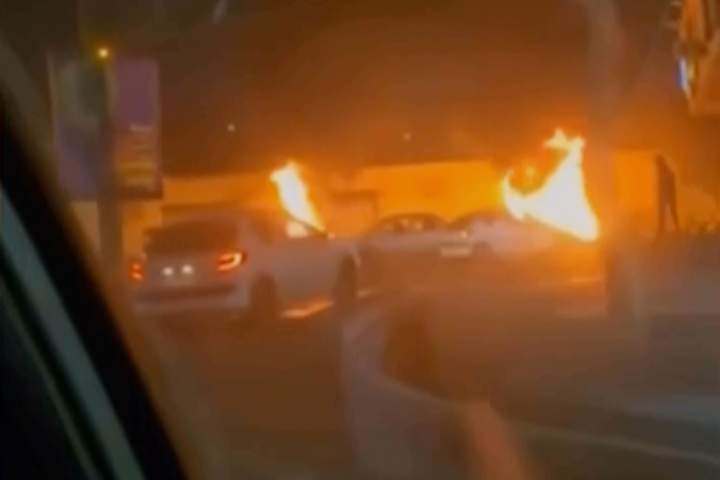
Iran faces a severe escalation in civil unrest as authorities implemented a nationwide internet blackout on Friday, December 1, 2023. This measure aims to stifle the surge of anti-government protests that have erupted across various cities. Videos circulating on social media reveal widespread chaos, with buildings and vehicles set ablaze amid clashes between demonstrators and security forces.
In a televised address, Supreme Leader Ayatollah Ali Khamenei pledged to remain steadfast against the protests, which he claims are instigated by émigré opposition groups and foreign powers, notably the United States. Reports from human rights organizations indicate that police have opened fire on demonstrators in southern regions, resulting in multiple fatalities.
Although the current unrest has not mobilized as diverse a segment of society as previous protests over the past fifteen years, the situation remains critical. At least dozens are reported dead, and the Iranian authorities appear increasingly vulnerable, grappling with a faltering economy and the repercussions of recent military conflicts with Israel and the United States.
Initial demonstrations began last month, sparked by economic grievances, particularly over the devaluation of the rial, which lost half its value against the dollar in 2022. Inflation rates exceeded 40% in December, igniting protests that have since evolved to include direct criticisms of the government. The internet blackout has significantly hampered the flow of information, with mobile calls into Iran being disrupted and at least 17 flights between Dubai and Iran canceled, according to Dubai Airport.
Protests initially organized by shopkeepers in major bazaars have expanded to universities and provincial cities, where young men have clashed violently with security forces. State television has shown footage of burning buses, cars, and motorbikes, with reports of fires at underground railway stations and banks. The government attributes the unrest to the People’s Mujahedin Organisation, a longstanding opposition faction that split from the ruling regime after the 1979 Islamic Revolution.
In a stark depiction of the chaos, a state TV journalist in the Caspian Sea port city of Rasht described the area as resembling a “war zone,” noting that shops had been destroyed. Verified videos from Tehran also depicted large crowds marching, with chants calling for the ousting of Khamenei.
The Iranian rights group Hengaw reported that a protest march following Friday prayers in Zahedan, a city with a significant Baluch minority, encountered gunfire, injuring several protesters. Authorities have adopted a dual approach, acknowledging the legitimacy of economic protests while labeling violent actions as unlawful and responding with security crackdowns.
Khamenei, the ultimate authority in Iran, delivered a defiant speech, stating, “The Islamic Republic came to power through the blood of hundreds of thousands of honorable people. It will not back down in the face of vandals.” The head of the judiciary, Gholamhossein Mohseni Ejei, emphasized that punishments for those involved in the unrest would be “decisive, maximal, and without legal leniency.”
Meanwhile, fragmented external opposition factions have called for continued protests, with demonstrators chanting slogans such as “Death to the dictator!” and expressing support for the monarchy that was overthrown in 1979. Reza Pahlavi, the exiled son of the last Shah of Iran, urged Iranians via social media to take to the streets, saying, “The eyes of the world are upon you.”
While these calls for action resonate, the level of support for either the monarchy or the MKO within Iran remains a contentious topic. In a recent statement, Donald Trump indicated that he would not meet with Pahlavi, expressing uncertainty about the appropriateness of supporting him.
On the international front, Germany condemned the violence against protesters, asserting that the right to demonstrate and assemble must be respected and that media in Iran should be allowed to report freely. As the situation unfolds, the global community watches closely, aware of the potential implications for regional stability and international relations.

Meta Plans Major Layoffs as AI Costs Surge

Alberta’s Referendum Could Pave Way for U.S. Statehood

Minooka District 201 Plans Enhanced Bilingual Support for Students

Canmore Approves Multiple Development Permits for New Projects

Remembering Bradly Castillo Shearsmith: A Life of Friendship and Joy

BIS Urges Watchdogs to Integrate Synthetic Risk Transfers in Stress Tests

Teva Transforms: Shifting Focus from Generics to Branded Success

Apple Launches AirPods Max 2 with Enhanced Audio Features

Ontario Ends Funding for Seven Supervised Injection Sites

Toyoake City Proposes Daily Two-Hour Smartphone Use Limit

Pedestrian Fatally Injured in Esquimalt Collision on August 14

B.C. Review Reveals Urgent Need for Rare-Disease Drug Reforms

Dark Adventure Game “Bye Sweet Carole” Set for October Release

Konami Revives Iconic Metal Gear Solid Delta Ahead of Release

Victoria’s Pop-Up Shop Shines Light on B.C.’s Wolf Cull

Jimmy Lai’s Defense Challenges Charges Under National Security Law

Snapmaker U1 Color 3D Printer Redefines Speed and Sustainability

Apple Expands Self-Service Repair Program to Canada
-
 Science12 months ago
Toyoake City Proposes Daily Two-Hour Smartphone Use Limit
-
 Top Stories12 months ago
Pedestrian Fatally Injured in Esquimalt Collision on August 14
-
 Health12 months ago
B.C. Review Reveals Urgent Need for Rare-Disease Drug Reforms
-
 Technology12 months ago
Dark Adventure Game “Bye Sweet Carole” Set for October Release
-
 Technology12 months ago
Konami Revives Iconic Metal Gear Solid Delta Ahead of Release
-
 Lifestyle12 months ago
Victoria’s Pop-Up Shop Shines Light on B.C.’s Wolf Cull
-
 World12 months ago
Jimmy Lai’s Defense Challenges Charges Under National Security Law
-
 Technology12 months ago
Snapmaker U1 Color 3D Printer Redefines Speed and Sustainability
-
 Technology12 months ago
Apple Expands Self-Service Repair Program to Canada
-

 Technology12 months ago
AION Folding Knife: Redefining EDC Design with Premium Materials
-

 Technology12 months ago
Solve Today’s Wordle Challenge: Hints and Answer for August 19
-

 Business12 months ago
Gordon Murray Automotive Unveils S1 LM and Le Mans GTR at Monterey