
World
US Allocates $45 Million in Aid to Strengthen Thai-Cambodian Stability

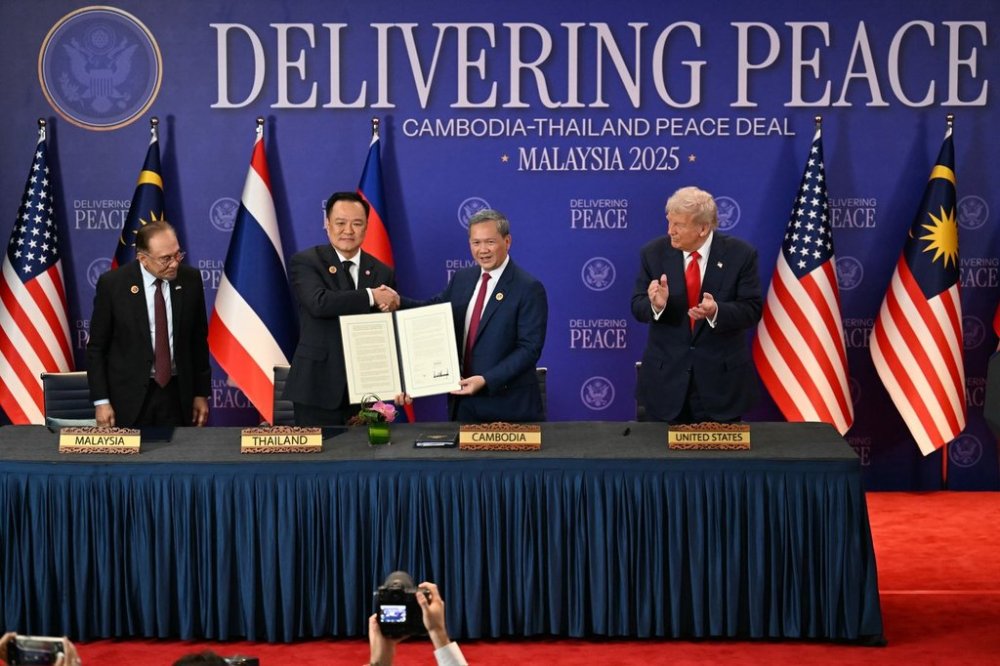
The United States has announced a significant aid package totaling $45 million aimed at enhancing stability in Thailand and Cambodia. This initiative follows the U.S. involvement in resolving border clashes between the two nations last year, as confirmed by a senior U.S. State Department official on March 15, 2024.
In a briefing held in Bangkok, U.S. Assistant Secretary of State for East Asian and Pacific Affairs, Michael DeSombre, detailed the aid allocations, emphasizing their importance for regional prosperity. The funding will be distributed as follows: $15 million for border stabilization to assist recovery efforts in affected communities and support displaced individuals, $10 million for demining operations, and $20 million dedicated to combating scams and drug trafficking.
The U.S. engagement in the region is particularly relevant following a ceasefire agreement last October, known as the Kuala Lumpur Peace Accords. The agreement was prompted by longstanding territorial disputes that led to violent clashes in July and December, which resulted in the displacement of hundreds of thousands and approximately 100 fatalities among soldiers and civilians.
DeSombre remarked, “The restoration of peace at the Thai-Cambodian border opens new opportunities for the United States to deepen our work with both countries to promote regional stability.” He is set to meet with Cambodian officials in Phnom Penh to discuss further collaboration.
The conflict has left a lasting impact, with land mines from Cambodia’s civil war continuing to pose risks. Thailand has reported injuries to its soldiers due to newly laid mines along the border. Additionally, the rising trend of online scams originating from Southeast Asia, particularly Cambodia and Myanmar, has become a pressing issue, costing victims billions globally.
U.S. foreign aid to Southeast Asia had faced significant cuts in previous years, especially during the Trump administration, which saw the shutdown of the U.S. Agency for International Development (USAID). The recent aid announcement represents a renewed commitment to humanitarian and development initiatives in the region.
Last year’s clashes initially erupted for five days in late July before a preliminary ceasefire was established, largely due to diplomatic pressure, including from Malaysian Prime Minister Anwar Ibrahim. President Donald Trump subsequently intervened, warning both nations that continued hostilities would jeopardize prospective trade agreements. The ceasefire was formally confirmed later in October during a regional meeting in Malaysia.
Despite the resurgence of tensions in early 2023, further commitments were made when Thai and Cambodian defense ministers signed a new pact on December 27, reaffirming their dedication to the October agreement.
DeSombre concluded the briefing by reiterating the U.S. focus on fostering peace globally, stating, “President Trump is a president of peace, and really believes that peace is critical to economic growth and prosperity.” The U.S. aid package signifies a strategic move to bolster stability in a region marked by historical conflict and ongoing challenges.

Meta Plans Major Layoffs as AI Costs Surge

Alberta’s Referendum Could Pave Way for U.S. Statehood

Minooka District 201 Plans Enhanced Bilingual Support for Students

Canmore Approves Multiple Development Permits for New Projects

Remembering Bradly Castillo Shearsmith: A Life of Friendship and Joy

BIS Urges Watchdogs to Integrate Synthetic Risk Transfers in Stress Tests

Teva Transforms: Shifting Focus from Generics to Branded Success

Apple Launches AirPods Max 2 with Enhanced Audio Features

Ontario Ends Funding for Seven Supervised Injection Sites

Toyoake City Proposes Daily Two-Hour Smartphone Use Limit

Pedestrian Fatally Injured in Esquimalt Collision on August 14

B.C. Review Reveals Urgent Need for Rare-Disease Drug Reforms

Dark Adventure Game “Bye Sweet Carole” Set for October Release

Konami Revives Iconic Metal Gear Solid Delta Ahead of Release

Victoria’s Pop-Up Shop Shines Light on B.C.’s Wolf Cull

Jimmy Lai’s Defense Challenges Charges Under National Security Law

Snapmaker U1 Color 3D Printer Redefines Speed and Sustainability

Apple Expands Self-Service Repair Program to Canada
-
 Science12 months ago
Toyoake City Proposes Daily Two-Hour Smartphone Use Limit
-
 Top Stories12 months ago
Pedestrian Fatally Injured in Esquimalt Collision on August 14
-
 Health12 months ago
B.C. Review Reveals Urgent Need for Rare-Disease Drug Reforms
-
 Technology11 months ago
Dark Adventure Game “Bye Sweet Carole” Set for October Release
-
 Technology12 months ago
Konami Revives Iconic Metal Gear Solid Delta Ahead of Release
-
 Lifestyle12 months ago
Victoria’s Pop-Up Shop Shines Light on B.C.’s Wolf Cull
-
 World12 months ago
Jimmy Lai’s Defense Challenges Charges Under National Security Law
-
 Technology12 months ago
Snapmaker U1 Color 3D Printer Redefines Speed and Sustainability
-
 Technology12 months ago
Apple Expands Self-Service Repair Program to Canada
-

 Technology12 months ago
AION Folding Knife: Redefining EDC Design with Premium Materials
-

 Technology12 months ago
Solve Today’s Wordle Challenge: Hints and Answer for August 19
-

 Business12 months ago
Gordon Murray Automotive Unveils S1 LM and Le Mans GTR at Monterey