
World
Sahel Alliance Launches Large-Scale Operations Against Extremists

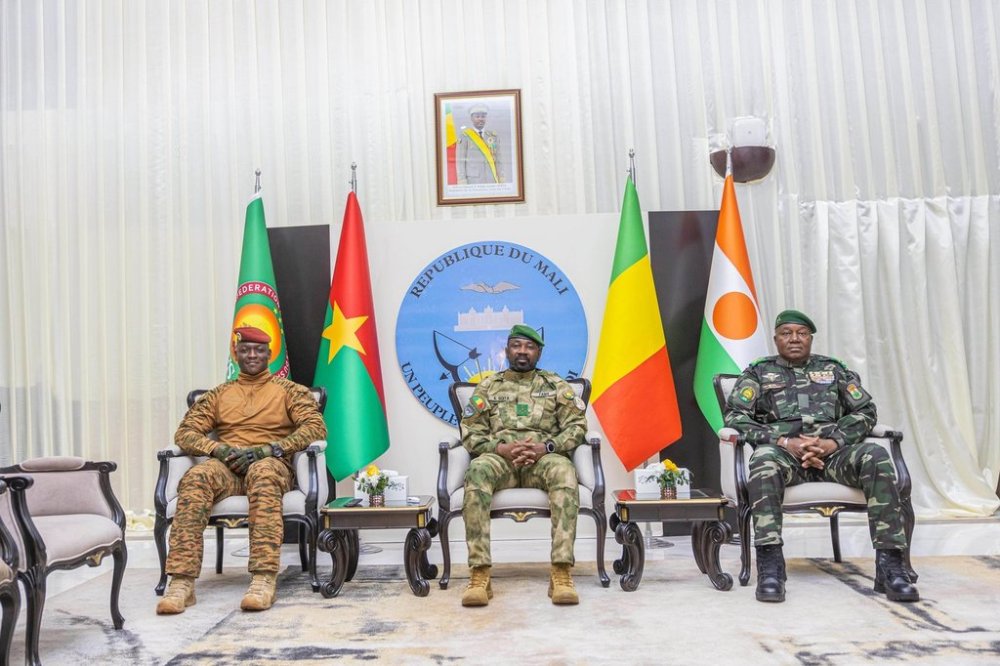
The leaders of Mali, Burkina Faso, and Niger have announced the initiation of large-scale military operations against extremist groups in the Sahel region. During a summit held on March 12, 2024, the newly appointed head of the Alliance of Sahel States, Capt. Ibrahim Traoré of Burkina Faso, emphasized that the recent establishment of a joint battalion must be complemented by extensive coordinated actions in the coming days.
This collaborative effort comes as the Sahel region, located south of the Sahara Desert, has become increasingly troubled by violence perpetrated by armed groups linked to both al-Qaida and the Islamic State. In recent years, all three member countries have experienced political instability, including military coups, which have strained their security capabilities.
The summit underscored a shared commitment among the leaders to enhance both security and economic collaboration, particularly following the formation of the joint military battalion aimed at countering the threats posed by extremist factions. Abdourahamane Tchiani, leader of Niger’s junta, stated, “The alliance has put an end to all occupation forces in our countries,” referring to the expulsion of longstanding military partners such as France and the United States.
The leaders of Mali, Burkina Faso, and Niger view their alliance as a sovereignty-driven response to external influences. Tchiani further declared, “No country or interest group will decide for our countries anymore,” highlighting a shift toward self-reliance in addressing security challenges.
While the formation of this alliance is a significant step, the Sahel’s security landscape remains complex and difficult to navigate. Rida Lyammouri, a specialist from the Policy Center for the New South in Morocco, noted that the ongoing crisis remains “very difficult to defeat.” This observation reflects the challenges faced by the Sahel countries as they strive to maintain stability and security.
The summit marked the second annual gathering of the alliance, signifying a growing collaboration despite the backdrop of strained relations and sanctions imposed by international partners due to the coups. Ulf Laessing, head of the Sahel program at the Konrad Adenauer Foundation, indicated that the alliance enjoys considerable support among the populace of its member states. He added that the leaders are keen to sustain this momentum by fostering cooperation that extends beyond military operations.
As the joint battalion prepares for its upcoming missions, the region watches closely. The outcomes of these operations could significantly impact the security dynamics in the Sahel, which has become one of the most perilous areas for extremism worldwide.

Meta Plans Major Layoffs as AI Costs Surge

Alberta’s Referendum Could Pave Way for U.S. Statehood

Minooka District 201 Plans Enhanced Bilingual Support for Students

Canmore Approves Multiple Development Permits for New Projects

Remembering Bradly Castillo Shearsmith: A Life of Friendship and Joy

BIS Urges Watchdogs to Integrate Synthetic Risk Transfers in Stress Tests

Teva Transforms: Shifting Focus from Generics to Branded Success

Apple Launches AirPods Max 2 with Enhanced Audio Features

Ontario Ends Funding for Seven Supervised Injection Sites

Toyoake City Proposes Daily Two-Hour Smartphone Use Limit

Pedestrian Fatally Injured in Esquimalt Collision on August 14

B.C. Review Reveals Urgent Need for Rare-Disease Drug Reforms

Dark Adventure Game “Bye Sweet Carole” Set for October Release

Konami Revives Iconic Metal Gear Solid Delta Ahead of Release

Victoria’s Pop-Up Shop Shines Light on B.C.’s Wolf Cull

Jimmy Lai’s Defense Challenges Charges Under National Security Law

Snapmaker U1 Color 3D Printer Redefines Speed and Sustainability

Apple Expands Self-Service Repair Program to Canada
-
 Science11 months ago
Toyoake City Proposes Daily Two-Hour Smartphone Use Limit
-
 Top Stories11 months ago
Pedestrian Fatally Injured in Esquimalt Collision on August 14
-
 Health11 months ago
B.C. Review Reveals Urgent Need for Rare-Disease Drug Reforms
-
 Technology11 months ago
Dark Adventure Game “Bye Sweet Carole” Set for October Release
-
 Technology11 months ago
Konami Revives Iconic Metal Gear Solid Delta Ahead of Release
-
 Lifestyle11 months ago
Victoria’s Pop-Up Shop Shines Light on B.C.’s Wolf Cull
-
 World11 months ago
Jimmy Lai’s Defense Challenges Charges Under National Security Law
-
 Technology11 months ago
Snapmaker U1 Color 3D Printer Redefines Speed and Sustainability
-
 Technology11 months ago
Apple Expands Self-Service Repair Program to Canada
-

 Technology11 months ago
AION Folding Knife: Redefining EDC Design with Premium Materials
-

 Technology11 months ago
Solve Today’s Wordle Challenge: Hints and Answer for August 19
-

 Business11 months ago
Gordon Murray Automotive Unveils S1 LM and Le Mans GTR at Monterey