
World
South Korea Seeks China’s Mediation in North Korean Crisis

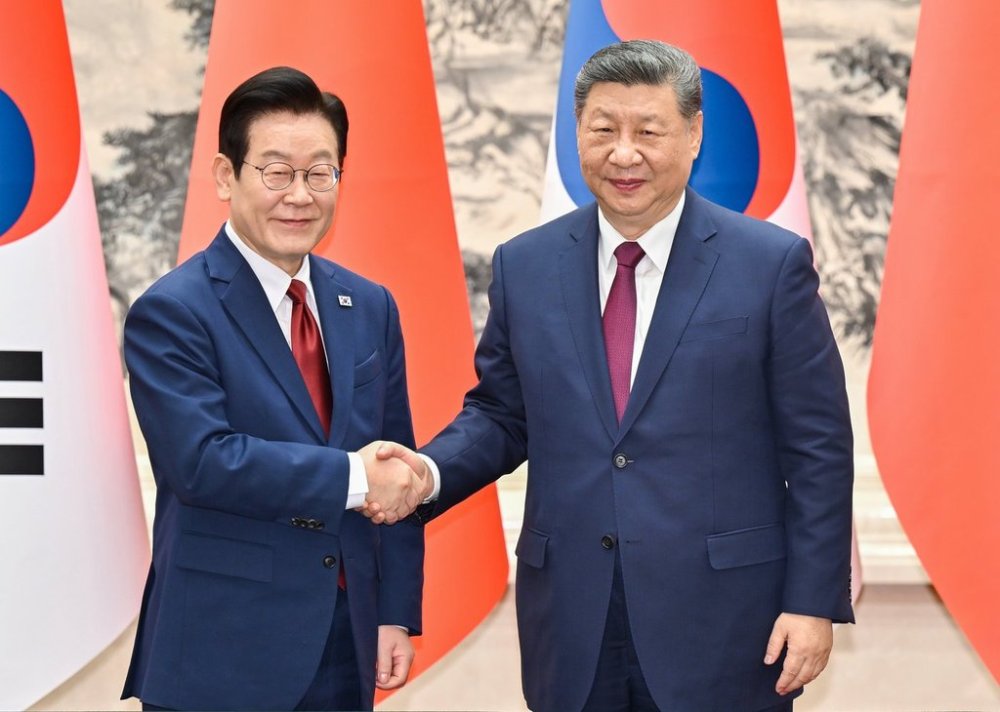
South Korean President Lee Jae Myung has requested that Chinese President Xi Jinping act as a mediator in addressing the ongoing nuclear crisis posed by North Korea. This request was made during a summit held earlier this week in Beijing, where leaders discussed the rising tensions and the lack of communication with North Korea.
During a press briefing in Shanghai, Lee emphasized the urgency of the situation. He noted that all communication channels with North Korea are currently blocked, stating, “We’re making efforts but all our channels are completely blocked so we can’t communicate at all.” Lee expressed hope that China could facilitate a peaceful resolution, adding, “It would be good for China to play the role of a mediator for peace.”
China holds a unique position as North Korea’s largest trading partner and key diplomatic ally. As such, both South Korea and the United States have repeatedly urged China to leverage its influence to encourage North Korea to engage in diplomacy and consider denuclearization.
China has consistently called for restraint from all parties involved in North Korean issues. Despite this, it has often blocked attempts by the U.S. and other nations to impose stricter sanctions on North Korea, particularly in light of its continued weapons tests, which violate United Nations resolutions.
The relationship between North Korea and its southern neighbor remains tense, as Pyongyang has refused to engage in dialogue with both South Korea and the United States. Following the collapse of high-profile negotiations between North Korean leader Kim Jong Un and former U.S. President Donald Trump in 2019, North Korea has taken steps to enhance its nuclear capabilities, further complicating the security landscape.
Since taking office in June, Lee’s administration has been adamant about reopening lines of communication with North Korea. However, Pyongyang’s reaction has largely been dismissive. In July, Kim Yo Jong, sister of Kim Jong Un and a senior official in the North, criticized the Lee government for its “blind trust” in the U.S. alliance and hostility towards North Korea, indicating that it is no different from the previous conservative administration.
In another meeting with Chinese Premier Li Qiang, Lee reported a similar message of patience regarding North Korean issues. “We requested China to play such a role, and China said it will make such efforts,” he stated.
Lee articulated his vision for a phased approach to denuclearization, proposing that North Korea should first freeze its nuclear and missile programs. He believes this step is crucial to prevent further escalation of its nuclear arsenal and potential proliferation. He expressed concern that maintaining the current status quo would be detrimental to both Northeast Asia and the broader global community, especially as North Korea continues to produce nuclear weapons.
Despite these discussions, North Korea has firmly stated that it will not entertain the idea of denuclearization again. Many analysts warn that offering rewards for limited denuclearization could lead North Korea to disengage from negotiations while retaining a significant portion of its nuclear capability, particularly if it receives sanctions relief in the process.
The situation remains precarious, with Lee’s government striving to find a diplomatic pathway forward, reliant on the support and mediation of key regional players like China.

Meta Plans Major Layoffs as AI Costs Surge

Alberta’s Referendum Could Pave Way for U.S. Statehood

Minooka District 201 Plans Enhanced Bilingual Support for Students

Canmore Approves Multiple Development Permits for New Projects

Remembering Bradly Castillo Shearsmith: A Life of Friendship and Joy

BIS Urges Watchdogs to Integrate Synthetic Risk Transfers in Stress Tests

Teva Transforms: Shifting Focus from Generics to Branded Success

Apple Launches AirPods Max 2 with Enhanced Audio Features

Ontario Ends Funding for Seven Supervised Injection Sites

Toyoake City Proposes Daily Two-Hour Smartphone Use Limit

Pedestrian Fatally Injured in Esquimalt Collision on August 14

B.C. Review Reveals Urgent Need for Rare-Disease Drug Reforms

Dark Adventure Game “Bye Sweet Carole” Set for October Release

Konami Revives Iconic Metal Gear Solid Delta Ahead of Release

Victoria’s Pop-Up Shop Shines Light on B.C.’s Wolf Cull

Jimmy Lai’s Defense Challenges Charges Under National Security Law

Snapmaker U1 Color 3D Printer Redefines Speed and Sustainability

Apple Expands Self-Service Repair Program to Canada
-
 Science1 year ago
Toyoake City Proposes Daily Two-Hour Smartphone Use Limit
-
 Top Stories1 year ago
Pedestrian Fatally Injured in Esquimalt Collision on August 14
-
 Health1 year ago
B.C. Review Reveals Urgent Need for Rare-Disease Drug Reforms
-
 Technology1 year ago
Dark Adventure Game “Bye Sweet Carole” Set for October Release
-
 Technology1 year ago
Konami Revives Iconic Metal Gear Solid Delta Ahead of Release
-
 Lifestyle1 year ago
Victoria’s Pop-Up Shop Shines Light on B.C.’s Wolf Cull
-
 World1 year ago
Jimmy Lai’s Defense Challenges Charges Under National Security Law
-
 Technology1 year ago
Snapmaker U1 Color 3D Printer Redefines Speed and Sustainability
-
 Technology1 year ago
Apple Expands Self-Service Repair Program to Canada
-

 Technology1 year ago
AION Folding Knife: Redefining EDC Design with Premium Materials
-

 Technology1 year ago
Solve Today’s Wordle Challenge: Hints and Answer for August 19
-

 Business1 year ago
Gordon Murray Automotive Unveils S1 LM and Le Mans GTR at Monterey