
World
Storm Byron Strikes Gaza, Highlighting Humanitarian Aid Shortfalls

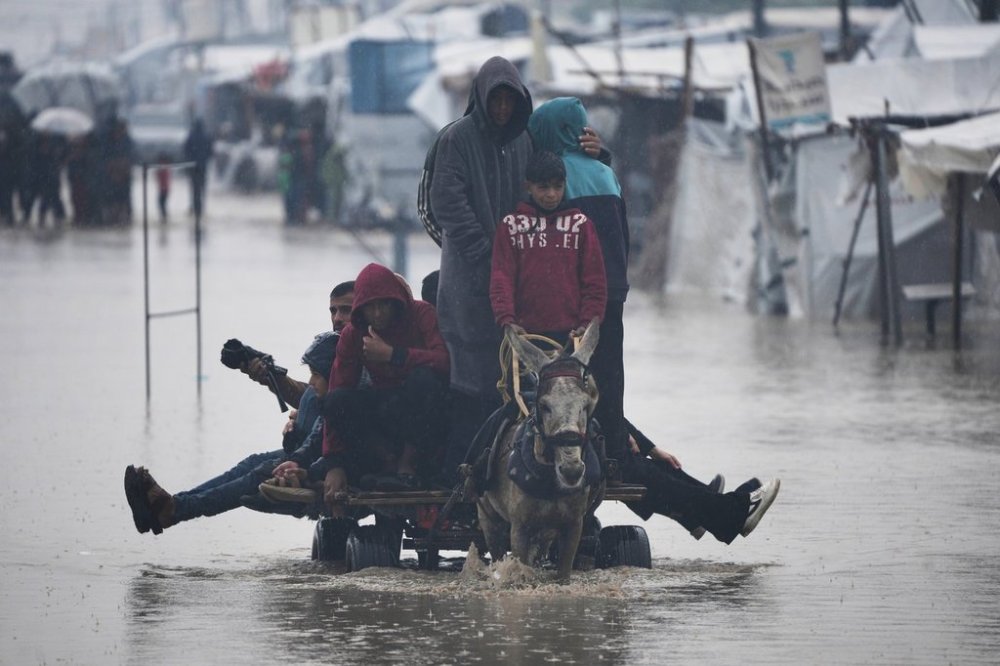
Heavy rains from Storm Byron have flooded tent camps in the Gaza Strip, exacerbating the already dire humanitarian conditions faced by residents. As temperatures drop, families huddle in makeshift shelters, illustrating the failure of a two-month ceasefire to adequately address the escalating crisis in the war-torn territory.
On Thursday, as the storm unleashed its fury, Gaza’s displaced population, which numbers around 2 million, faced waterlogged conditions. Children splashed through muddy waters that inundated their camps, while trucks maneuvered cautiously to avoid creating waves of mud that could further damage the tents.
Um Salman Abu Qenas, a mother forced to evacuate from east of Khan Younis, described the bleak situation in Deir al-Balah. “We have been drowned. I don’t have clothes to wear, and we have no mattresses left,” she said, explaining that her family had been unable to sleep due to the flooding.
Aid organizations have criticized the insufficient delivery of shelter aid, asserting that the terms of the ceasefire have not been met. Recent figures from Israel’s military indicate that the daily target of allowing 600 trucks of aid into Gaza has not been achieved, although Israeli officials dispute this claim.
The United Nations Relief and Works Agency for Palestine Refugees in the Near East (UNRWA) issued a stark warning, stating, “Cold, overcrowded, and unsanitary environments heighten the risk of illness and infection.” The agency emphasized that unhindered humanitarian aid, including medical support and proper shelter, could alleviate much of the suffering.
The impact of Storm Byron was felt throughout various camps. Sabreen Qudeeh recounted how her family awoke to rain leaking from their tent’s ceiling. “My little daughters were screaming and got shocked when they saw water on the floor,” she said. Ahmad Abu Taha, another resident, noted that no tent was spared from the flooding, highlighting the vulnerability of the population, including the elderly and sick.
While Israel experienced heavy rains and flood warnings, the stark contrast in conditions between the two regions underscored the extensive damage inflicted by the Israel-Hamas conflict. Most of Gaza’s housing has been destroyed, leaving many residents to live in sprawling tent camps that lack adequate infrastructure to manage flooding.
In response to the storm, the Palestinian Civil Defense, part of the Hamas-run government, reported receiving over 2,500 distress calls from citizens whose shelters were damaged. Aid groups assert that Israel’s restrictions on aid are preventing the rebuilding of essential infrastructure in Gaza, a sentiment echoed by local leaders.
Under previous agreements, Israel was expected to allow not only food and medical supplies but also temporary housing and tents. According to the Norwegian Refugee Council, the number of tents delivered since the ceasefire began is significantly lower than required, with only 15,590 tents entering Gaza, in stark contrast to the estimated 300,000 tents needed.
Amjad al-Shawa, the Gaza chief of the Palestinian NGO Network, criticized the limited aid and called for increased support, stating, “There is real danger for people in Gaza at all levels.” He emphasized the urgency of providing warmer clothing and equipment to address the flooding.
Khaled Mashaal, a senior official with Hamas, added that many tents are now worn out due to the prolonged conflict. He called for the opening of the Rafah crossing to facilitate the entry of heavy machinery needed for reconstruction efforts. Mashaal also urged for a transition to the next phase of the ceasefire, which would focus on rebuilding Gaza.
The current humanitarian crisis highlights the challenges faced by both the residents of Gaza and the international community in addressing their needs. As dialogue continues surrounding the ceasefire agreement, regional leaders stress the importance of timely action to prevent further suffering.
The situation remains precarious as negotiations advance, with both sides holding firm to their demands. The outcome of these discussions will be crucial in determining the future of aid and recovery for the beleaguered population of Gaza.

Meta Plans Major Layoffs as AI Costs Surge

Alberta’s Referendum Could Pave Way for U.S. Statehood

Minooka District 201 Plans Enhanced Bilingual Support for Students

Canmore Approves Multiple Development Permits for New Projects

Remembering Bradly Castillo Shearsmith: A Life of Friendship and Joy

BIS Urges Watchdogs to Integrate Synthetic Risk Transfers in Stress Tests

Teva Transforms: Shifting Focus from Generics to Branded Success

Apple Launches AirPods Max 2 with Enhanced Audio Features

Ontario Ends Funding for Seven Supervised Injection Sites

Toyoake City Proposes Daily Two-Hour Smartphone Use Limit

Pedestrian Fatally Injured in Esquimalt Collision on August 14

B.C. Review Reveals Urgent Need for Rare-Disease Drug Reforms

Dark Adventure Game “Bye Sweet Carole” Set for October Release

Konami Revives Iconic Metal Gear Solid Delta Ahead of Release

Victoria’s Pop-Up Shop Shines Light on B.C.’s Wolf Cull

Jimmy Lai’s Defense Challenges Charges Under National Security Law

Snapmaker U1 Color 3D Printer Redefines Speed and Sustainability

Apple Expands Self-Service Repair Program to Canada
-
 Science12 months ago
Toyoake City Proposes Daily Two-Hour Smartphone Use Limit
-
 Top Stories12 months ago
Pedestrian Fatally Injured in Esquimalt Collision on August 14
-
 Health12 months ago
B.C. Review Reveals Urgent Need for Rare-Disease Drug Reforms
-
 Technology11 months ago
Dark Adventure Game “Bye Sweet Carole” Set for October Release
-
 Technology12 months ago
Konami Revives Iconic Metal Gear Solid Delta Ahead of Release
-
 Lifestyle12 months ago
Victoria’s Pop-Up Shop Shines Light on B.C.’s Wolf Cull
-
 World12 months ago
Jimmy Lai’s Defense Challenges Charges Under National Security Law
-
 Technology12 months ago
Snapmaker U1 Color 3D Printer Redefines Speed and Sustainability
-
 Technology12 months ago
Apple Expands Self-Service Repair Program to Canada
-

 Technology12 months ago
AION Folding Knife: Redefining EDC Design with Premium Materials
-

 Technology12 months ago
Solve Today’s Wordle Challenge: Hints and Answer for August 19
-

 Business12 months ago
Gordon Murray Automotive Unveils S1 LM and Le Mans GTR at Monterey