
World
Sudanese Doctor’s Daring Escape from El-Fasher Under Siege

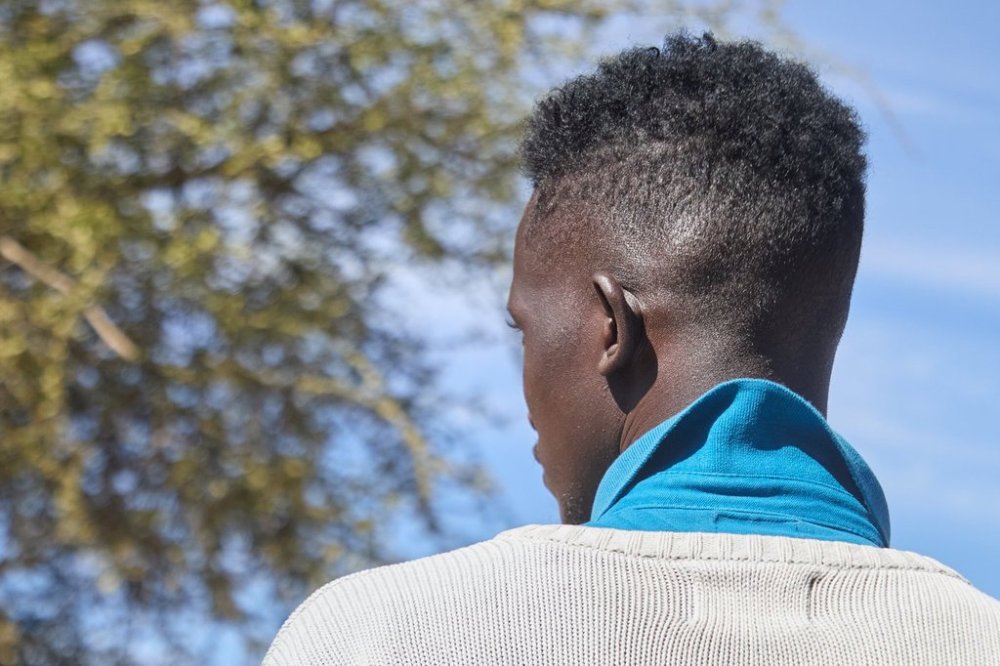
CAIRO — Dr. Mohamed Ibrahim, a 28-year-old physician, narrowly escaped the chaos in el-Fasher, the capital of Sudan’s North Darfur province, as fierce clashes erupted between paramilitary forces and the Sudanese army. For three harrowing days, the city was engulfed in violence, leaving destruction and despair in its wake. Ibrahim’s account reveals the severe human toll of the conflict, which has escalated dramatically since the military coup that ousted Sudan’s civilian-led government in 2021.
The assault began on October 26, 2023, as the Rapid Support Forces (RSF) launched a coordinated attack, targeting the last stronghold of the Sudanese army in the region. As he fled the last operational hospital in the city, Ibrahim witnessed the aftermath of the assault, where streets were strewn with bodies and chaos reigned. “All around we saw people running and falling to the ground,” he recounted to The Associated Press, expressing his fear of not surviving the day.
The situation in el-Fasher has drawn attention from international bodies, with United Nations officials reporting that thousands of civilians have perished in the violence. While precise figures remain elusive, it is estimated that only 40% of the city’s 260,000 residents managed to escape the onslaught. The RSF’s actions have turned el-Fasher into what U.N. officials describe as a “massive crime scene,” with humanitarian access severely limited.
Ibrahim’s harrowing journey began at dawn on the day of the attack. He was treating patients at the Saudi Maternity Hospital when shelling intensified. Recognizing the imminent danger, he and a colleague decided to flee toward a nearby army base. Their escape was fraught with peril; as they navigated the city, they encountered relentless gunfire. The hospital itself was attacked shortly after their departure, resulting in the deaths of at least one nurse and injuries to three others.
In a desperate bid for safety, Ibrahim darted between buildings and even jumped from rooftops to avoid detection. He took shelter in an empty water tank while the sounds of shelling echoed around him. After nearly nine hours, he reached the military base, where he found thousands of civilians seeking refuge, many of whom were injured. Despite the overwhelming circumstances, Ibrahim used scraps of clothing to tend to the wounded.
As night fell, he joined a group of approximately 200 people heading toward Tawila, a town 70 kilometers (43 miles) away, which had seen an influx of fleeing civilians. Their progress was impeded by RSF fighters who had dug deep trenches to reinforce their blockade of el-Fasher. Many in the group could not scale the steep walls of the trench, and some were caught in crossfire, leaving several dead.
On October 27, the group encountered RSF fighters who captured Ibrahim and four others, chaining them to motorcycles and forcing them to run behind. During their captivity, the militants interrogated them, and ransom demands quickly followed. Initially, the fighters demanded $20,000 each, a staggering sum in a country where monthly salaries average between $30 and $50. After enduring threats and violence, Ibrahim’s colleague secured a lower ransom of $8,000 each, which was paid by Ibrahim’s family.
Once freed, the doctors were blindfolded and transported in a truck, initially believing they were headed to safety. Instead, they were abandoned in an RSF-controlled area, prompting fears of re-capture. Ultimately, they managed to spot tracks leading away from the militants and began to follow them. Ibrahim later described their survival as a miracle, stating, “When we reached Tawila, I was embraced by a fellow physician who thought I had been killed. We both wept.”
As the conflict in Sudan continues to evolve, stories like Ibrahim’s highlight not only the profound humanitarian crisis unfolding but also the resilience of those caught in the midst of violence. The international community remains vigilant, seeking to provide assistance and address the escalating humanitarian needs in the region.

Meta Plans Major Layoffs as AI Costs Surge

Alberta’s Referendum Could Pave Way for U.S. Statehood

Minooka District 201 Plans Enhanced Bilingual Support for Students

Canmore Approves Multiple Development Permits for New Projects

Remembering Bradly Castillo Shearsmith: A Life of Friendship and Joy

BIS Urges Watchdogs to Integrate Synthetic Risk Transfers in Stress Tests

Teva Transforms: Shifting Focus from Generics to Branded Success

Apple Launches AirPods Max 2 with Enhanced Audio Features

Ontario Ends Funding for Seven Supervised Injection Sites

Toyoake City Proposes Daily Two-Hour Smartphone Use Limit

Pedestrian Fatally Injured in Esquimalt Collision on August 14

B.C. Review Reveals Urgent Need for Rare-Disease Drug Reforms

Dark Adventure Game “Bye Sweet Carole” Set for October Release

Konami Revives Iconic Metal Gear Solid Delta Ahead of Release

Victoria’s Pop-Up Shop Shines Light on B.C.’s Wolf Cull

Jimmy Lai’s Defense Challenges Charges Under National Security Law

Snapmaker U1 Color 3D Printer Redefines Speed and Sustainability

Apple Expands Self-Service Repair Program to Canada
-
 Science12 months ago
Toyoake City Proposes Daily Two-Hour Smartphone Use Limit
-
 Top Stories12 months ago
Pedestrian Fatally Injured in Esquimalt Collision on August 14
-
 Health12 months ago
B.C. Review Reveals Urgent Need for Rare-Disease Drug Reforms
-
 Technology11 months ago
Dark Adventure Game “Bye Sweet Carole” Set for October Release
-
 Technology12 months ago
Konami Revives Iconic Metal Gear Solid Delta Ahead of Release
-
 Lifestyle12 months ago
Victoria’s Pop-Up Shop Shines Light on B.C.’s Wolf Cull
-
 World12 months ago
Jimmy Lai’s Defense Challenges Charges Under National Security Law
-
 Technology12 months ago
Snapmaker U1 Color 3D Printer Redefines Speed and Sustainability
-
 Technology12 months ago
Apple Expands Self-Service Repair Program to Canada
-

 Technology12 months ago
AION Folding Knife: Redefining EDC Design with Premium Materials
-

 Technology12 months ago
Solve Today’s Wordle Challenge: Hints and Answer for August 19
-

 Business12 months ago
Gordon Murray Automotive Unveils S1 LM and Le Mans GTR at Monterey