
World
U.S. Air Force Transforms Commercial Jets for Military Missions

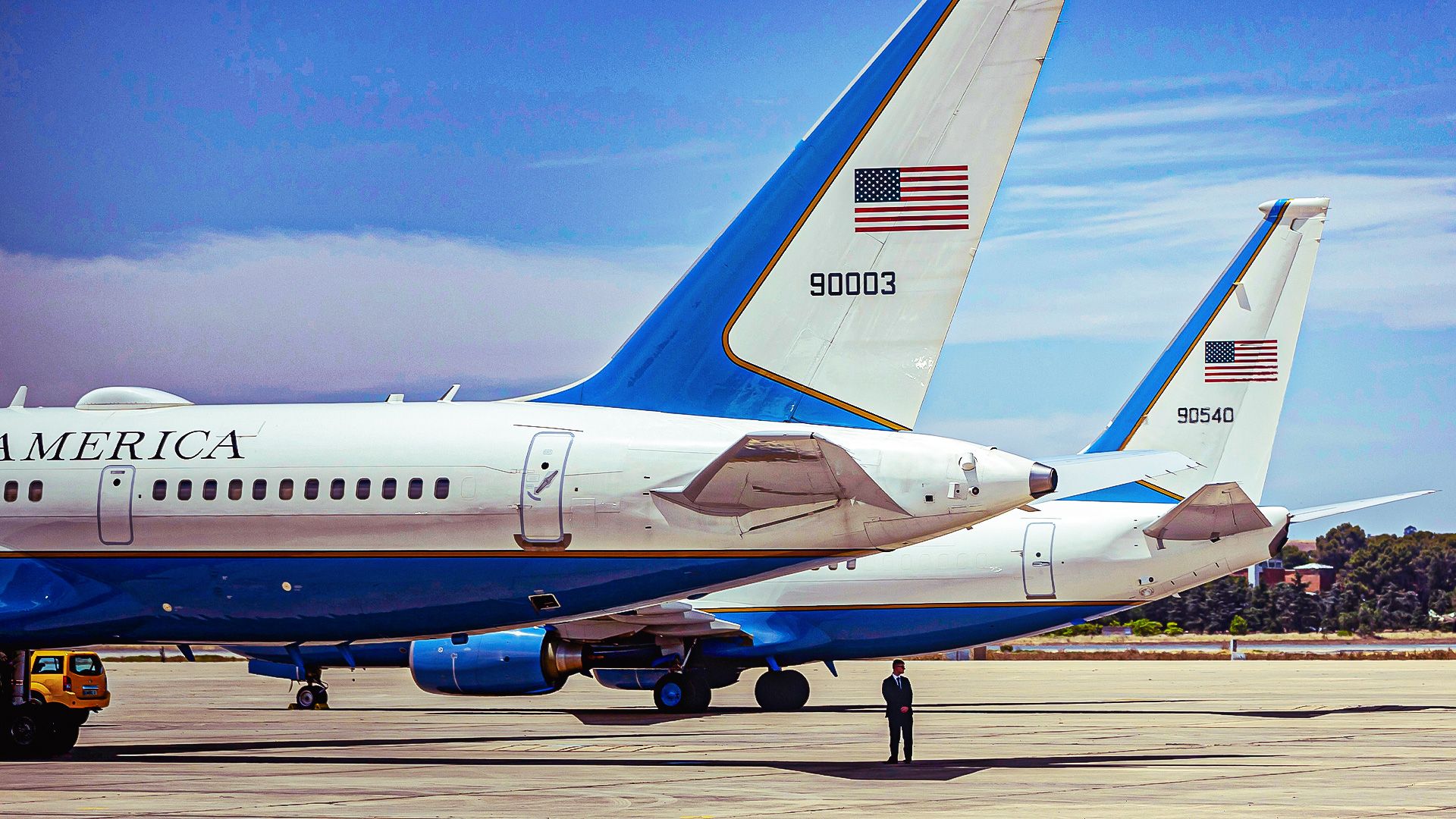
The debate over whether the United States Air Force (USAF) uses refurbished commercial jets has sparked interest. While some may envision a low-cost airline’s hand-me-downs, the truth is far more complex. The USAF does utilize aircraft based on commercial designs, and occasionally, it acquires airframes previously operated by commercial airlines. However, the term “refurbished” does not accurately capture the extensive modifications these aircraft undergo before they are fit for military service.
When a civilian-derived aircraft is selected for military use, it undergoes a comprehensive conversion process. This transformation includes the installation of secure communications systems, enhanced electrical power and cooling capabilities, specialized interiors, defensive systems, and rigorous certification and testing. Although the exterior may resemble that of a commercial jet, the operational and maintenance protocols differ significantly.
Military aircraft that are designed from commercial platforms serve multiple functions, including VIP transport. In certain instances, the Air Force may opt to purchase pre-owned airframes to expedite the entry into service. This approach is not routine but rather arises in specific circumstances. Thus, the answer to whether the Air Force uses refurbished commercial jets is nuanced: it does so at times but with significant modifications.
Understanding the Military’s Preference for Commercial Designs
The preference for commercial aircraft stems from their proven engineering, reliability, and extensive global support networks. These factors mitigate technical risks and accelerate acquisition times compared to creating entirely new military aircraft. Importantly, the value lies in the design’s commercial heritage rather than its second-hand status.
A civilian aircraft can be acquired new and still classified as commercial. Conversely, a pre-owned airliner may be stripped and rebuilt, with little of its original passenger configuration left intact. The cost of these transformations often relates to the sophisticated mission systems, cybersecurity measures, and redundancy requirements necessary for military operations.
The USAF operates jets that may outwardly resemble commercial models, but the aircraft themselves are customized to meet specific military standards. This transformation ensures that they possess the security, survivability, and sustainment capabilities required for military missions.
The Financial Implications of Military Conversions
Converting a civilian platform into a military asset involves substantial costs. The USAF must establish secure communications links, data connections, and encryption software, all of which demand new antennas, radios, and wiring. The conversion process also includes the installation of advanced power and cooling systems to maintain operational stability.
In missions involving VIP transport or national command, standards for conversion become even more stringent. Such aircraft not only transport individuals but also safeguard sensitive information and ensure continuous communication during crises. This necessitates the creation of secure workspaces, meeting areas, and systems designed to function under challenging conditions.
The testing, certification, and configuration control processes are rigorous and must be adhered to over the aircraft’s lifespan. The financial burden rests not on the airframe alone but on the secure capabilities and long-term maintainability that these military transformations provide.
The VC-25B, built on the Boeing 747-8, exemplifies the transformation of a commercial aircraft into a military asset. This aircraft is designed to support the presidential airlift mission and requires numerous modifications to ensure operational reliability. The USAF’s acquisition of additional Boeing 747-8 airframes—previously operated by an airline—highlights the need for a specialized fleet to replace the older VC-25A aircraft.
The strategic value of these used commercial aircraft lies in their ability to facilitate smooth operations and reduce overall program risk during transitions. As production of the Boeing 747 has ceased, acquiring used models becomes increasingly essential for maintaining a reliable support ecosystem.
The C-32, based on the Boeing 757-200, serves as a daily transport for senior leaders and critical government missions. Its conversion process tailors the aircraft to military needs, featuring dedicated workspaces and communication capabilities that enable operations while airborne.
The C-40, derived from the Boeing 737, showcases the USAF’s reliance on civilian aircraft for military logistics. It operates efficiently, moving teams and equipment swiftly, often through major airports that benefit from its narrow-body design. Each C-40 variant may focus on different functionalities, such as executive transport or enhanced communication access.
In conclusion, transforming commercial passenger aircraft into military-specific designs is vital for the USAF’s operational capabilities. These aircraft represent a blend of proven reliability and advanced military requirements. Despite challenges inherent in the conversion process, the USAF continues to leverage these aircraft to achieve essential missions. The strategic choice to adapt civilian designs provides the military with access to long-range, reliable transport solutions while ensuring operational readiness for decades to come.

Meta Plans Major Layoffs as AI Costs Surge

Alberta’s Referendum Could Pave Way for U.S. Statehood

Minooka District 201 Plans Enhanced Bilingual Support for Students

Canmore Approves Multiple Development Permits for New Projects

Remembering Bradly Castillo Shearsmith: A Life of Friendship and Joy

BIS Urges Watchdogs to Integrate Synthetic Risk Transfers in Stress Tests

Teva Transforms: Shifting Focus from Generics to Branded Success

Apple Launches AirPods Max 2 with Enhanced Audio Features

Ontario Ends Funding for Seven Supervised Injection Sites

Toyoake City Proposes Daily Two-Hour Smartphone Use Limit

Pedestrian Fatally Injured in Esquimalt Collision on August 14

B.C. Review Reveals Urgent Need for Rare-Disease Drug Reforms

Dark Adventure Game “Bye Sweet Carole” Set for October Release

Konami Revives Iconic Metal Gear Solid Delta Ahead of Release

Victoria’s Pop-Up Shop Shines Light on B.C.’s Wolf Cull

Jimmy Lai’s Defense Challenges Charges Under National Security Law

Snapmaker U1 Color 3D Printer Redefines Speed and Sustainability

Apple Expands Self-Service Repair Program to Canada
-
 Science12 months ago
Toyoake City Proposes Daily Two-Hour Smartphone Use Limit
-
 Top Stories12 months ago
Pedestrian Fatally Injured in Esquimalt Collision on August 14
-
 Health12 months ago
B.C. Review Reveals Urgent Need for Rare-Disease Drug Reforms
-
 Technology11 months ago
Dark Adventure Game “Bye Sweet Carole” Set for October Release
-
 Technology12 months ago
Konami Revives Iconic Metal Gear Solid Delta Ahead of Release
-
 Lifestyle12 months ago
Victoria’s Pop-Up Shop Shines Light on B.C.’s Wolf Cull
-
 World12 months ago
Jimmy Lai’s Defense Challenges Charges Under National Security Law
-
 Technology12 months ago
Snapmaker U1 Color 3D Printer Redefines Speed and Sustainability
-
 Technology12 months ago
Apple Expands Self-Service Repair Program to Canada
-

 Technology12 months ago
AION Folding Knife: Redefining EDC Design with Premium Materials
-

 Technology12 months ago
Solve Today’s Wordle Challenge: Hints and Answer for August 19
-

 Business12 months ago
Gordon Murray Automotive Unveils S1 LM and Le Mans GTR at Monterey