
World
US Lawmakers Preserve Boeing E-7 Wedgetail Program Funding

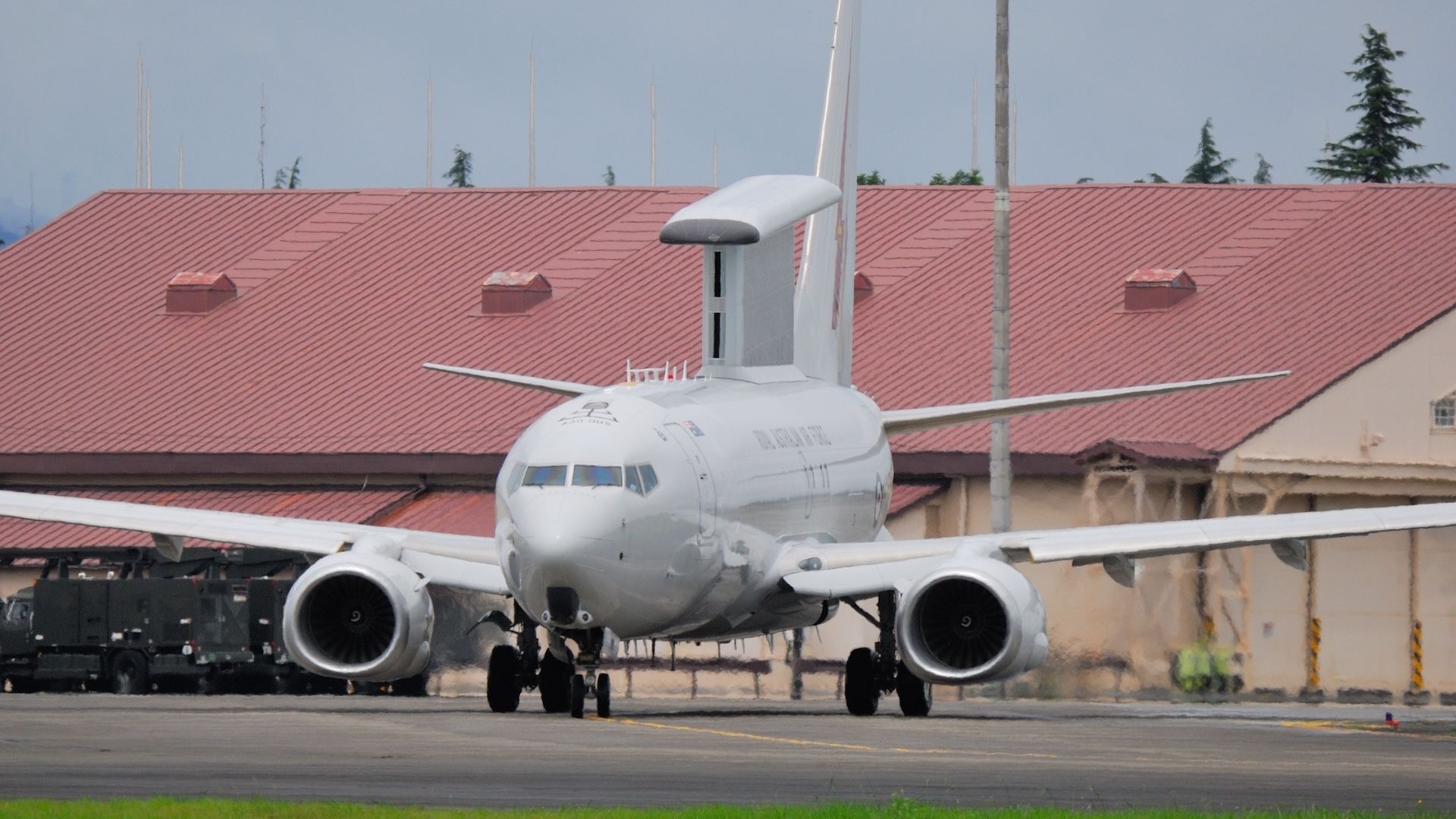
US lawmakers successfully intervened to block the Pentagon’s plans to cancel the Boeing E-7 Wedgetail program, ensuring continued funding for this advanced airborne early warning aircraft. This decision was made during negotiations over the US defense budget, responding to the Department of Defense’s proposal to terminate the program due to escalating costs and delays, as well as a shift towards alternative surveillance solutions. According to The Wall Street Journal, lawmakers emphasized the need to address increasing global security threats and capability gaps, reinforcing the necessity of the E-7 for the US Air Force amid rising competition with near-peer adversaries.
Lawmakers Reinforce Support for E-7 Development
The E-7 Wedgetail is designed to replace the aging Boeing E-3 Sentry fleet, which has served as a cornerstone of US airborne command and control for decades. Built on the Boeing 737 NG platform, the aircraft has already been integrated into the fleets of several allies, prompting questions regarding the rationale behind the US potentially abandoning a proven technology. Despite the Pentagon’s argument that newer space-based systems could lessen the need for crewed surveillance aircraft, lawmakers expressed strong reservations. Their intervention reflects robust congressional support for maintaining manned airborne early warning capabilities.
The Pentagon’s initial proposal would have cut funding for the E-7 program, even after the Air Force awarded Boeing a $1.2 billion contract in 2023 to develop the aircraft, according to Air Force Times. Lawmakers from both political parties voiced concerns that canceling the program would exacerbate existing surveillance deficiencies. Ultimately, Congress restored funding during the latest defense authorization process, disregarding Pentagon objections despite the cost of each aircraft rising to $724 million, an increase from the initial $588 million.
By blocking the cancellation, lawmakers aim to ensure the ongoing development of the E-7 Wedgetail, crucial for replacing the E-3 Sentry, which has been plagued by declining availability and increasing maintenance costs. The United States Air Force has acknowledged the E-3 fleet’s limitations in meeting current operational requirements. Congressional leaders warned that either delaying or scrapping the E-7 would create a dangerous capability gap in airborne surveillance.
Global Adoption and Technological Advantages
The Boeing E-7 Wedgetail originated from Australia’s initiative in the early 2000s to modernize its fleet. The aircraft features Northrop Grumman’s Multi-role Electronically Scanned Array (MESA) radar, mounted on a distinctive dorsal fin, allowing it to track airborne and surface threats over extensive distances. This capability is vital for modern air warfare, providing battle management and command-and-control functions.
Several allied nations, including Australia, the United Kingdom, South Korea, and Turkey, have already adopted the E-7. The UK’s Royal Air Force recently showcased the aircraft at the RIAT Airshow in July 2025, following delays in certification. Operators have commended the platform for its reliability and lower operational costs compared to the older E-3 model. These international endorsements have bolstered congressional arguments for maintaining the US program.
The E-7’s modern commercial supply chain and extensive support infrastructure significantly reduce long-term sustainment costs and enhance operational availability, distinguishing it from the aging E-3 aircraft. Abandoning the E-7 could undermine interoperability with allies already using the platform, which is essential for effective coalition operations.
Congress has committed to acquiring Boeing E-7 prototypes built outside the US, further emphasizing the program’s significance. The Pentagon’s hesitance to fully endorse the E-7 stems from a broader strategic shift towards space-based intelligence, surveillance, and reconnaissance systems. While officials advocate for satellites due to their persistent coverage, these assets face vulnerabilities, such as jamming and anti-satellite threats. Airborne platforms like the E-7 offer flexibility and resilience, complementing satellite capabilities in contested environments.
Boeing positions the E-7 as a transitional solution between legacy airborne warning systems and future networked battle management frameworks. The aircraft’s ability to integrate data from various sources, including satellites, fighters, and drones, highlights its relevance in modern warfare. With an established industrial base already producing aircraft for international customers, the continuation of the E-7 program is vital for US aerospace jobs and defense capabilities.
For the time being, congressional backing ensures that the E-7 Wedgetail remains central to the US Air Force’s modernization initiatives. Although discussions regarding surveillance strategies are expected to persist, lawmakers have made it clear that phasing out the E-3 without a suitable replacement is not an option. The survival of the Wedgetail underscores broader concerns about military readiness, alliance interoperability, and the rapid pace of technological advancements in contemporary warfare.

Meta Plans Major Layoffs as AI Costs Surge

Alberta’s Referendum Could Pave Way for U.S. Statehood

Minooka District 201 Plans Enhanced Bilingual Support for Students

Canmore Approves Multiple Development Permits for New Projects

Remembering Bradly Castillo Shearsmith: A Life of Friendship and Joy

BIS Urges Watchdogs to Integrate Synthetic Risk Transfers in Stress Tests

Teva Transforms: Shifting Focus from Generics to Branded Success

Apple Launches AirPods Max 2 with Enhanced Audio Features

Ontario Ends Funding for Seven Supervised Injection Sites

Toyoake City Proposes Daily Two-Hour Smartphone Use Limit

Pedestrian Fatally Injured in Esquimalt Collision on August 14

B.C. Review Reveals Urgent Need for Rare-Disease Drug Reforms

Dark Adventure Game “Bye Sweet Carole” Set for October Release

Konami Revives Iconic Metal Gear Solid Delta Ahead of Release

Victoria’s Pop-Up Shop Shines Light on B.C.’s Wolf Cull

Jimmy Lai’s Defense Challenges Charges Under National Security Law

Snapmaker U1 Color 3D Printer Redefines Speed and Sustainability

Apple Expands Self-Service Repair Program to Canada
-
 Science12 months ago
Toyoake City Proposes Daily Two-Hour Smartphone Use Limit
-
 Top Stories12 months ago
Pedestrian Fatally Injured in Esquimalt Collision on August 14
-
 Health12 months ago
B.C. Review Reveals Urgent Need for Rare-Disease Drug Reforms
-
 Technology11 months ago
Dark Adventure Game “Bye Sweet Carole” Set for October Release
-
 Technology12 months ago
Konami Revives Iconic Metal Gear Solid Delta Ahead of Release
-
 Lifestyle12 months ago
Victoria’s Pop-Up Shop Shines Light on B.C.’s Wolf Cull
-
 World12 months ago
Jimmy Lai’s Defense Challenges Charges Under National Security Law
-
 Technology12 months ago
Snapmaker U1 Color 3D Printer Redefines Speed and Sustainability
-
 Technology12 months ago
Apple Expands Self-Service Repair Program to Canada
-

 Technology12 months ago
AION Folding Knife: Redefining EDC Design with Premium Materials
-

 Technology12 months ago
Solve Today’s Wordle Challenge: Hints and Answer for August 19
-

 Business12 months ago
Gordon Murray Automotive Unveils S1 LM and Le Mans GTR at Monterey