
World
USS Kearsarge Completes F-35B Upgrade, Enhancing Navy Capabilities

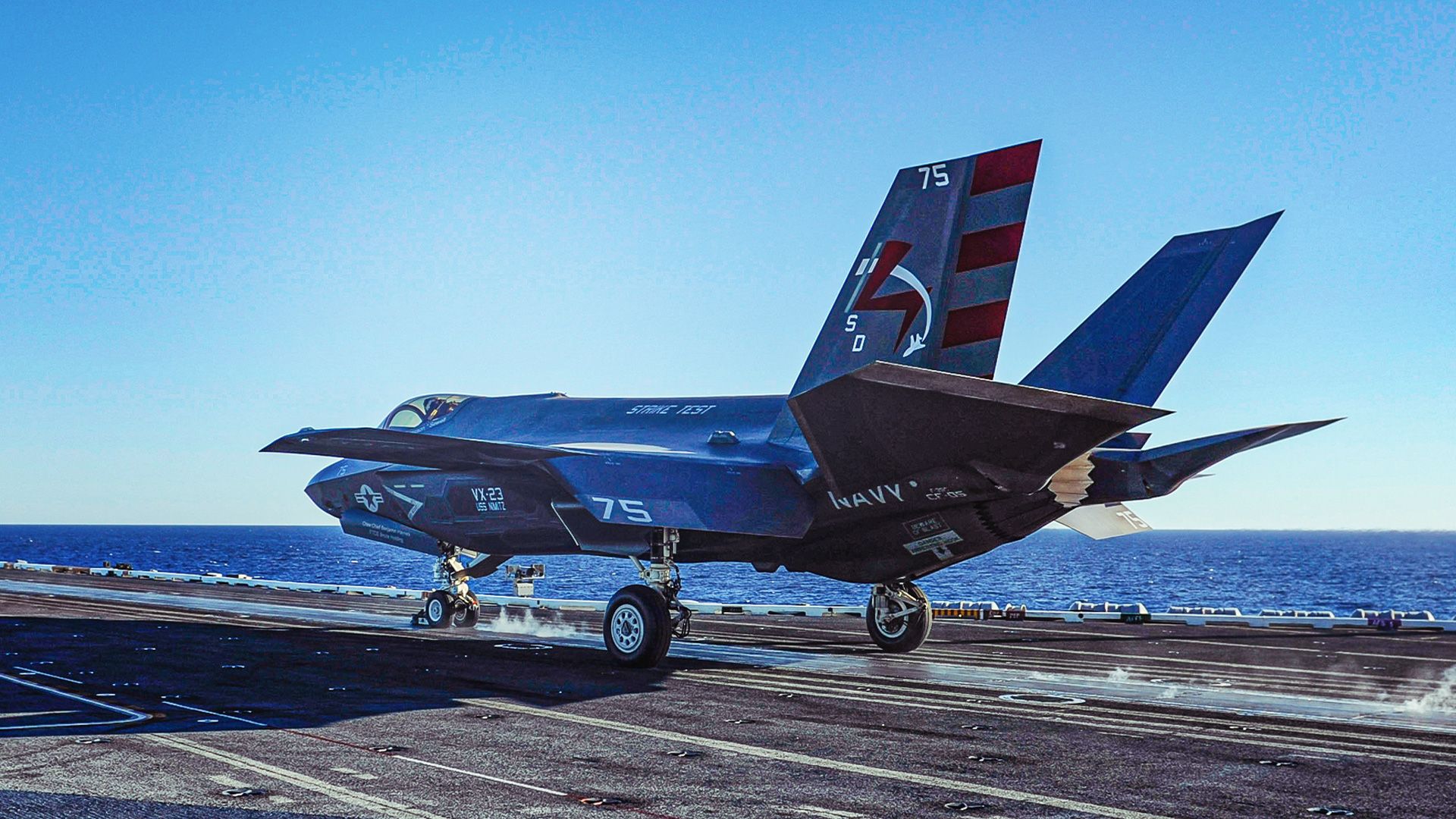
The USS Kearsarge, a Wasp-class amphibious assault ship, has successfully completed its first flight with the fifth-generation F-35B Lightning II fighter jet. This milestone follows two years of scheduled retrofits, positioning the vessel as a modernized force within the US Navy’s fleet. The F-35B is currently the only short takeoff and vertical landing (STOVL) fighter jet in production, enhancing the Navy’s amphibious capabilities significantly.
Originally commissioned in 1993, the USS Kearsarge displaces approximately 40,500 tons at full load, comparable to some of the world’s smaller aircraft carriers. Built to accommodate the Marine Corps’ MV-22B Ospreys and AV-8B Harriers, the Kearsarge has now transitioned to the more advanced F-35B, marking a significant shift in its operational capabilities and moving the Marines closer to a full transition to the F-35 platform.
Retrofitting US Navy Ships for F-35 Operations
The F-35B and F-35C variants are designed to operate from the Navy’s amphibious assault ships and aircraft carriers. However, the F-35’s unique requirements necessitate retrofits for older ships. The USS Gerald R. Ford (CVN-78), the newest aircraft carrier, will be the last to accommodate the F-35 due to its construction predating the finalization of the jet’s specifications. Scheduled maintenance cycles allow for these retrofits, ensuring compatibility with the F-35’s hotter exhaust and increased size.
Currently, the Navy operates seven Wasp-class amphibious assault ships, with the USS Bonhomme Richard (LHD-6) decommissioned in 2021 following a significant fire. The remaining ships are undergoing upgrades to support F-35B operations. The USS Wasp (LHD-1), USS Essex (LHD-2), USS Kearsarge (LHD-3), and USS Boxer (LHD-4) have already completed their upgrades, while the USS Makin Island (LHD-8) was built with partial F-35B capabilities.
The USS Bataan (LHD-5) is currently undergoing a two-year maintenance and modernization process, expected to finish in the coming months. This will enable it to be certified for F-35B operations. The only remaining ship awaiting retrofit is the USS Iwo Jima (LHD-7), which is scheduled to begin its upgrade program in June 2026.
The Future of Amphibious Assault Capabilities
With the Kearsarge’s re-entry into active service and the upcoming commissioning of the USS Bougainville, the US Navy is on track to have nine F-35-capable amphibious assault ships by the completion of the Iwo Jima’s retrofit. This transition signifies the end of the AV-8B Harrier era, with the Marine Corps planning to retire its remaining Harrier fleet in June 2026. The F-35B represents a substantial upgrade in technology, offering stealth capabilities and a longer combat radius compared to the aging Harrier.
Transitioning to the F-35B requires several modifications to the Wasp-class ships, including enhancements to accommodate the aircraft’s high-heat exhaust and structural adjustments for vertical landings. Upgrades to the flight deck, hangars, and combat systems are also crucial for effective F-35B operations. A contract awarded to BAE Systems for the Iwo Jima’s upgrades could reach up to $255.8 million if all options are utilized.
As the US Navy continues to evolve its fleet, the integration of advanced platforms like the F-35B is set to reshape its operational capabilities. The phased transition from older aircraft to newer models will ensure that the Navy remains prepared for contemporary and future challenges in military aviation.

Meta Plans Major Layoffs as AI Costs Surge

Alberta’s Referendum Could Pave Way for U.S. Statehood

Minooka District 201 Plans Enhanced Bilingual Support for Students

Canmore Approves Multiple Development Permits for New Projects

Remembering Bradly Castillo Shearsmith: A Life of Friendship and Joy

BIS Urges Watchdogs to Integrate Synthetic Risk Transfers in Stress Tests

Teva Transforms: Shifting Focus from Generics to Branded Success

Apple Launches AirPods Max 2 with Enhanced Audio Features

Ontario Ends Funding for Seven Supervised Injection Sites

Toyoake City Proposes Daily Two-Hour Smartphone Use Limit

Pedestrian Fatally Injured in Esquimalt Collision on August 14

B.C. Review Reveals Urgent Need for Rare-Disease Drug Reforms

Dark Adventure Game “Bye Sweet Carole” Set for October Release

Konami Revives Iconic Metal Gear Solid Delta Ahead of Release

Victoria’s Pop-Up Shop Shines Light on B.C.’s Wolf Cull

Jimmy Lai’s Defense Challenges Charges Under National Security Law

Snapmaker U1 Color 3D Printer Redefines Speed and Sustainability

Apple Expands Self-Service Repair Program to Canada
-
 Science12 months ago
Toyoake City Proposes Daily Two-Hour Smartphone Use Limit
-
 Top Stories12 months ago
Pedestrian Fatally Injured in Esquimalt Collision on August 14
-
 Health12 months ago
B.C. Review Reveals Urgent Need for Rare-Disease Drug Reforms
-
 Technology12 months ago
Dark Adventure Game “Bye Sweet Carole” Set for October Release
-
 Technology12 months ago
Konami Revives Iconic Metal Gear Solid Delta Ahead of Release
-
 Lifestyle12 months ago
Victoria’s Pop-Up Shop Shines Light on B.C.’s Wolf Cull
-
 World12 months ago
Jimmy Lai’s Defense Challenges Charges Under National Security Law
-
 Technology12 months ago
Snapmaker U1 Color 3D Printer Redefines Speed and Sustainability
-
 Technology12 months ago
Apple Expands Self-Service Repair Program to Canada
-

 Technology12 months ago
AION Folding Knife: Redefining EDC Design with Premium Materials
-

 Technology12 months ago
Solve Today’s Wordle Challenge: Hints and Answer for August 19
-

 Business12 months ago
Gordon Murray Automotive Unveils S1 LM and Le Mans GTR at Monterey