
Education
A Teacher’s Secret Transforms a Struggling Student’s Journey

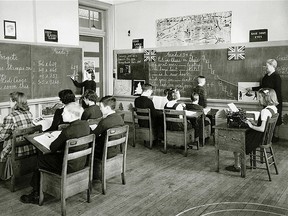
A teacher’s unexpected revelation changed the academic trajectory of a failing student in Ontario in 1949. The student’s struggle to grasp historical facts about the Spice Trade transformed into a deeper understanding of motivation and context, illustrating the impact of effective teaching methods.
In the mid-20th century, education in Ontario was markedly different from today. According to historical accounts, schools of that era often did not accommodate diverse learning needs, leading to stark differences in student outcomes. For instance, a comparison of students who entered kindergarten in 1935 reveals that only 10 out of 100 continued their education past high school. In contrast, contemporary statistics show that approximately 80 out of 100 students now graduate from high school.
Reflecting on his own experience, the student, who faced significant challenges in memorizing facts, found himself at a crucial point in his education. He attended Glebe Collegiate, where the principal, W.T.D. “Chubby” Atkinson, took a progressive approach by allowing him to advance in one subject despite failing others. This decision proved pivotal, as it saved him from the typical fate of students who struggled in a system better suited for those with strong memorization skills.
The turning point for this student occurred during a lesson about the Spice Trade. While studying the voyages of famous explorers such as Magellan and Vasco da Gama, he struggled to remember the details of their journeys. The geography teacher, known for his intense demeanor, pulled him aside after class to explain the underlying reasons for the explorers’ perilous quests. The teacher’s candid revelation—that spices like nutmeg and cloves were not just valuable for culinary purposes but also had a connection to desire—gave the student a new perspective.
“Cloves made them HORNY!” the teacher exclaimed, emphasizing the allure of the spices that drove men to risk their lives. This insight resonated deeply with the 14-year-old. It transformed the way he approached learning, allowing him to connect the dots and internalize the information rather than merely memorize it for an exam.
The student retook the test and passed, marking a significant achievement in a system that often left behind those who could not conform to traditional learning styles. His experience highlights a critical shift in educational philosophy from rote memorization to understanding the “why” behind the facts.
Today’s educational landscape aims to foster curiosity and critical thinking rather than simply producing students who can recite information. While advancements have been made, the challenge remains to engage students meaningfully and address diverse learning needs.
In reflecting on the metaphor of the cream separator, the narrative illustrates how educational systems can delineate students based on their abilities to adapt and conform. The past may have separated students into distinct categories, but modern approaches strive to integrate all learners, ensuring that everyone has the opportunity to thrive in their own way.
Ultimately, the story of this student serves as a reminder of the profound impact a single teacher can have on a young person’s life. By igniting a passion for learning through understanding, educators can inspire future generations to explore, question, and excel.

Meta Plans Major Layoffs as AI Costs Surge

Alberta’s Referendum Could Pave Way for U.S. Statehood

Minooka District 201 Plans Enhanced Bilingual Support for Students

Canmore Approves Multiple Development Permits for New Projects

Remembering Bradly Castillo Shearsmith: A Life of Friendship and Joy

BIS Urges Watchdogs to Integrate Synthetic Risk Transfers in Stress Tests

Teva Transforms: Shifting Focus from Generics to Branded Success

Apple Launches AirPods Max 2 with Enhanced Audio Features

Ontario Ends Funding for Seven Supervised Injection Sites

Toyoake City Proposes Daily Two-Hour Smartphone Use Limit

Pedestrian Fatally Injured in Esquimalt Collision on August 14

B.C. Review Reveals Urgent Need for Rare-Disease Drug Reforms

Dark Adventure Game “Bye Sweet Carole” Set for October Release

Konami Revives Iconic Metal Gear Solid Delta Ahead of Release

Victoria’s Pop-Up Shop Shines Light on B.C.’s Wolf Cull

Jimmy Lai’s Defense Challenges Charges Under National Security Law

Snapmaker U1 Color 3D Printer Redefines Speed and Sustainability

Apple Expands Self-Service Repair Program to Canada
-
 Science11 months ago
Toyoake City Proposes Daily Two-Hour Smartphone Use Limit
-
 Top Stories11 months ago
Pedestrian Fatally Injured in Esquimalt Collision on August 14
-
 Health11 months ago
B.C. Review Reveals Urgent Need for Rare-Disease Drug Reforms
-
 Technology11 months ago
Dark Adventure Game “Bye Sweet Carole” Set for October Release
-
 Technology11 months ago
Konami Revives Iconic Metal Gear Solid Delta Ahead of Release
-
 Lifestyle11 months ago
Victoria’s Pop-Up Shop Shines Light on B.C.’s Wolf Cull
-
 World11 months ago
Jimmy Lai’s Defense Challenges Charges Under National Security Law
-
 Technology11 months ago
Snapmaker U1 Color 3D Printer Redefines Speed and Sustainability
-
 Technology11 months ago
Apple Expands Self-Service Repair Program to Canada
-

 Technology11 months ago
AION Folding Knife: Redefining EDC Design with Premium Materials
-

 Technology11 months ago
Solve Today’s Wordle Challenge: Hints and Answer for August 19
-

 Business11 months ago
Gordon Murray Automotive Unveils S1 LM and Le Mans GTR at Monterey