
World
Global Leaders React as U.S. and Israel Strike Iran, Warn of Consequences

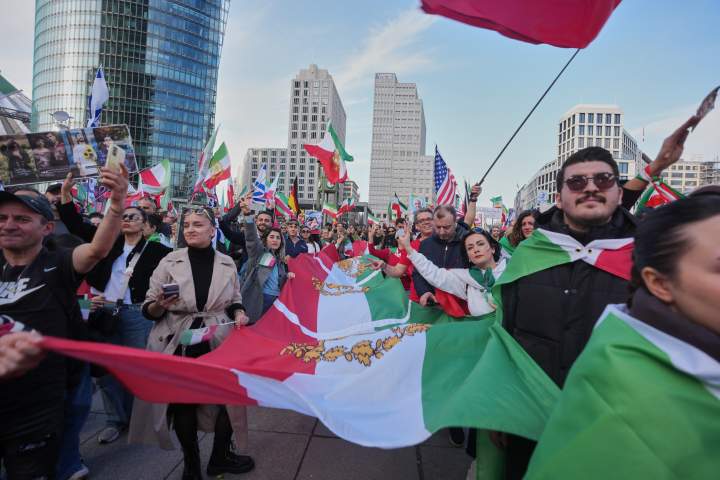
Military strikes launched by the United States and Israel against Iran on Saturday have provoked strong reactions from leaders around the world. U.S. President Donald Trump described the strikes as a measure aimed at overthrowing the Iranian regime, escalating tensions in an already volatile region.
United Nations Secretary-General Antonio Guterres condemned the military action, stating that it undermines international peace and security. In a statement, he remarked, “I condemn today’s military escalation in the Middle East. The use of force by the United States and Israel against Iran, and the subsequent retaliation by Iran across the region, undermine international peace and security.”
In response to the strikes, Iran immediately launched retaliatory actions targeting U.S. and Israeli military bases in several countries, including the United Arab Emirates, Bahrain, and Qatar. This rapid escalation has drawn further international condemnation.
The Saudi Arabian foreign ministry issued a statement expressing its strong disapproval of Iran’s attacks, emphasizing the need for stability in the region. Egyptian President Abdel-Fattah el-Sissi communicated with Saudi Crown Prince Mohammed Bin Salman, reaffirming Egypt’s solidarity with Saudi Arabia. He warned that ongoing military escalation would only exacerbate suffering for regional populations and hinder development opportunities.
Meanwhile, the Qatari foreign ministry asserted its right to respond to Iranian provocations, while also encouraging dialogue among all parties involved. “The State of Qatar has consistently sought to distance itself from regional conflicts and has worked to facilitate dialogue between the Iranian side and the international community,” the ministry stated.
In a significant response, the Russian foreign ministry described the actions of the U.S. and Israel as a dangerous course of action. The ministry stated, “This is a deliberate, premeditated, and unprovoked act of armed aggression against a sovereign and independent UN member state, in direct violation of the fundamental principles and norms of international law.”
The Chinese foreign ministry expressed serious concern regarding the attacks, emphasizing the importance of respecting Iran’s sovereignty. “China calls for an immediate stop of the military actions, no further escalation of the tense situation, resumption of dialogue and negotiation, and efforts to uphold peace and stability in the Middle East,” the statement read.
The European Union has voiced its apprehension but has not clearly indicated whether it supports or opposes the U.S. actions. In a joint statement, European Commission President Ursula von der Leyen and European Council President Antonio Costa highlighted the critical importance of ensuring nuclear safety and preventing further escalation. Von der Leyen announced the convening of a “special security College” of the EU to address the ongoing situation in Iran.
French President Emmanuel Macron described the situation as “dangerous,” warning that a war involving the United States, Israel, and Iran could have severe implications for international peace and security.
British Prime Minister Kieran Starmer clarified that while the UK played no role in the strikes, it has long opposed the Iranian regime. He stated that the UK is enhancing its defense capabilities in the area, with British forces actively engaged in coordinated regional operations to protect national and allied interests.
Australian Prime Minister Anthony Albanese openly expressed support for the U.S. actions, citing the necessity of preventing Iran from acquiring nuclear weapons and continuing to threaten international stability.
Canadian Prime Minister Mark Carney echoed this sentiment, affirming Canada’s support for U.S. measures aimed at deterring Iran. He urged all parties involved to prioritize civilian safety amid the escalating tensions. Global Affairs Canada has updated its travel advisories for Canadians in the region, urging those in Iran to seek shelter and register for updates regarding their safety.
The ongoing military actions signal a critical juncture in U.S.-Iran relations, with repercussions that could extend far beyond the immediate region. As world leaders call for restraint, the focus remains on whether diplomatic solutions can emerge amidst the heightened tensions.

Meta Plans Major Layoffs as AI Costs Surge

Alberta’s Referendum Could Pave Way for U.S. Statehood

Minooka District 201 Plans Enhanced Bilingual Support for Students

Canmore Approves Multiple Development Permits for New Projects

Remembering Bradly Castillo Shearsmith: A Life of Friendship and Joy

BIS Urges Watchdogs to Integrate Synthetic Risk Transfers in Stress Tests

Teva Transforms: Shifting Focus from Generics to Branded Success

Apple Launches AirPods Max 2 with Enhanced Audio Features

Ontario Ends Funding for Seven Supervised Injection Sites

Toyoake City Proposes Daily Two-Hour Smartphone Use Limit

Pedestrian Fatally Injured in Esquimalt Collision on August 14

B.C. Review Reveals Urgent Need for Rare-Disease Drug Reforms

Dark Adventure Game “Bye Sweet Carole” Set for October Release

Konami Revives Iconic Metal Gear Solid Delta Ahead of Release

Jimmy Lai’s Defense Challenges Charges Under National Security Law

Victoria’s Pop-Up Shop Shines Light on B.C.’s Wolf Cull

Snapmaker U1 Color 3D Printer Redefines Speed and Sustainability

Apple Expands Self-Service Repair Program to Canada
-
 Science11 months ago
Toyoake City Proposes Daily Two-Hour Smartphone Use Limit
-
 Top Stories11 months ago
Pedestrian Fatally Injured in Esquimalt Collision on August 14
-
 Health11 months ago
B.C. Review Reveals Urgent Need for Rare-Disease Drug Reforms
-
 Technology11 months ago
Dark Adventure Game “Bye Sweet Carole” Set for October Release
-
 Technology11 months ago
Konami Revives Iconic Metal Gear Solid Delta Ahead of Release
-
 World11 months ago
Jimmy Lai’s Defense Challenges Charges Under National Security Law
-
 Lifestyle11 months ago
Victoria’s Pop-Up Shop Shines Light on B.C.’s Wolf Cull
-
 Technology11 months ago
Snapmaker U1 Color 3D Printer Redefines Speed and Sustainability
-
 Technology11 months ago
Apple Expands Self-Service Repair Program to Canada
-

 Technology11 months ago
AION Folding Knife: Redefining EDC Design with Premium Materials
-

 Technology11 months ago
Solve Today’s Wordle Challenge: Hints and Answer for August 19
-

 Business11 months ago
Gordon Murray Automotive Unveils S1 LM and Le Mans GTR at Monterey