
Business
Vancouver Shipyard Secures Contract to Design U.S. Icebreakers

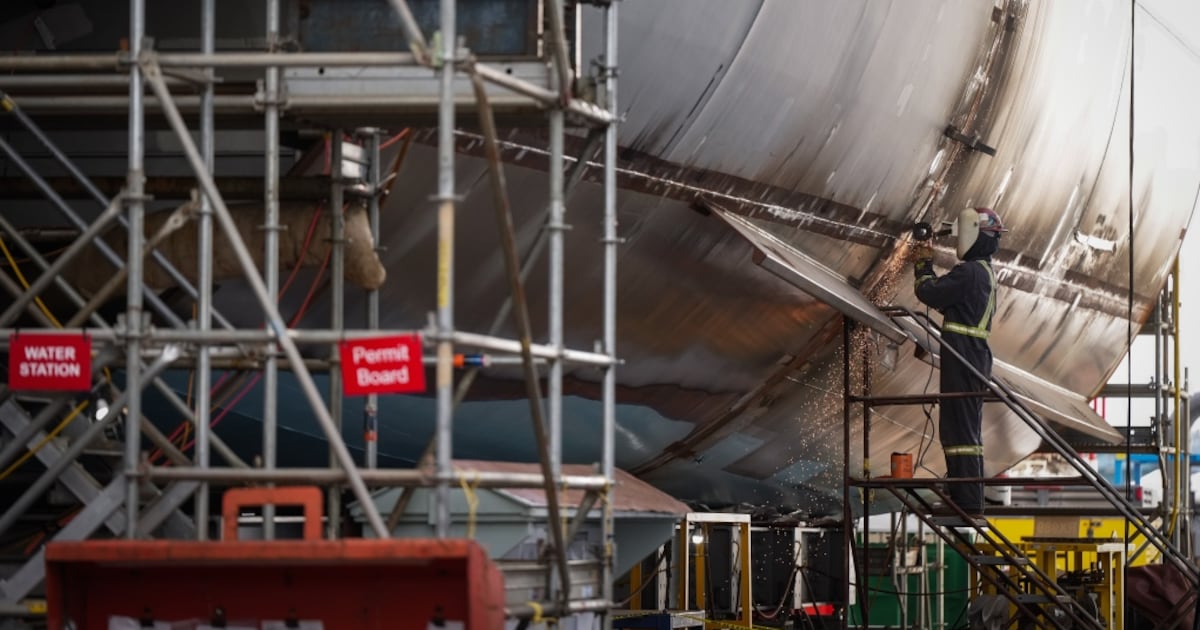
A shipyard in Vancouver has finalized a significant contract to design icebreakers for the United States Coast Guard. North Vancouver-based Seaspan Shipyards will provide designs for up to six icebreakers, each measuring 100 metres in length. These vessels, originally developed for the Canadian Coast Guard, are intended for Arctic operations and can navigate through ice up to 1.2 metres thick, with a range of approximately 22,000 kilometres.
This agreement was announced this week as part of Canada’s National Shipbuilding Strategy, under which Seaspan has been developing multi-purpose icebreaker designs since 2020. The Canadian Coast Guard has already committed to acquiring 16 of these vessels, with the first expected to be delivered in 2030. This project is budgeted at $14.2 billion.
Seaspan has not disclosed the financial details of the agreement but described it as the first export sale from a Canadian shipyard. A spokesperson for the company, Abigail Saxton, noted that this deal will foster collaboration between Canadian and American coast guard personnel. “The MPI (multi-purpose icebreaker) establishes a single class of versatile, multi-mission, medium icebreakers for both the United States and Canada and creates the largest single class of icebreakers in the world,” Saxton stated.
Partnerships and Production Timeline
The contract is part of a broader partnership that includes U.S.-based Bollinger Shipyards, which will construct two of the icebreakers, and Rauma Marine Constructions Oy from Finland, responsible for building the remaining four. The first two Finnish-built icebreakers are anticipated for delivery to the U.S. in 2028, while the initial American-built vessel is expected to be ready by 2029.
Seaspan emphasized that its design, developed in collaboration with Finnish partners, was completed largely in Canada. This allows the construction of the U.S. ships to commence without delay.
The U.S. Coast Guard has highlighted the importance of these new icebreakers in enhancing its operational capabilities in the Arctic. Secretary of Homeland Security Kristi Noem remarked, “Our adversaries continue to look to grow their presence in the Arctic. Equipping the Coast Guard with Arctic security cutters will help reassert American maritime dominance there.”
Strengthening Arctic Sovereignty
This development follows a trilateral agreement signed by the Canadian federal government, Finland, and the U.S. in November 2022, aimed at expanding their respective icebreaker fleets. The agreement is designed to reinforce collective sovereignty in the Arctic region, an area of increasing geopolitical importance.
The partnership between Seaspan and the U.S. Coast Guard not only reflects a growing collaboration between the two nations but also underscores the strategic significance of maintaining a robust presence in the Arctic. As climate change continues to open new maritime routes, the demand for capable icebreakers is expected to rise, making this agreement a timely and crucial advancement in Arctic operations.
With the first icebreakers on track for delivery within the next few years, both Canada and the United States are poised to enhance their capabilities in one of the world’s most challenging environments.

Meta Plans Major Layoffs as AI Costs Surge

Alberta’s Referendum Could Pave Way for U.S. Statehood

Minooka District 201 Plans Enhanced Bilingual Support for Students

Canmore Approves Multiple Development Permits for New Projects

Remembering Bradly Castillo Shearsmith: A Life of Friendship and Joy

BIS Urges Watchdogs to Integrate Synthetic Risk Transfers in Stress Tests

Teva Transforms: Shifting Focus from Generics to Branded Success

Apple Launches AirPods Max 2 with Enhanced Audio Features

Ontario Ends Funding for Seven Supervised Injection Sites

Toyoake City Proposes Daily Two-Hour Smartphone Use Limit

Pedestrian Fatally Injured in Esquimalt Collision on August 14

B.C. Review Reveals Urgent Need for Rare-Disease Drug Reforms

Dark Adventure Game “Bye Sweet Carole” Set for October Release

Konami Revives Iconic Metal Gear Solid Delta Ahead of Release

Jimmy Lai’s Defense Challenges Charges Under National Security Law

Victoria’s Pop-Up Shop Shines Light on B.C.’s Wolf Cull

Snapmaker U1 Color 3D Printer Redefines Speed and Sustainability

Apple Expands Self-Service Repair Program to Canada
-
 Science10 months ago
Toyoake City Proposes Daily Two-Hour Smartphone Use Limit
-
 Top Stories11 months ago
Pedestrian Fatally Injured in Esquimalt Collision on August 14
-
 Health11 months ago
B.C. Review Reveals Urgent Need for Rare-Disease Drug Reforms
-
 Technology10 months ago
Dark Adventure Game “Bye Sweet Carole” Set for October Release
-
 Technology11 months ago
Konami Revives Iconic Metal Gear Solid Delta Ahead of Release
-
 World10 months ago
Jimmy Lai’s Defense Challenges Charges Under National Security Law
-
 Lifestyle11 months ago
Victoria’s Pop-Up Shop Shines Light on B.C.’s Wolf Cull
-
 Technology10 months ago
Snapmaker U1 Color 3D Printer Redefines Speed and Sustainability
-
 Technology11 months ago
Apple Expands Self-Service Repair Program to Canada
-

 Technology10 months ago
AION Folding Knife: Redefining EDC Design with Premium Materials
-

 Technology11 months ago
Solve Today’s Wordle Challenge: Hints and Answer for August 19
-

 Business11 months ago
Gordon Murray Automotive Unveils S1 LM and Le Mans GTR at Monterey