
Technology
NASA Advances Artemis 2 Mission with Moon Rocket Rollout

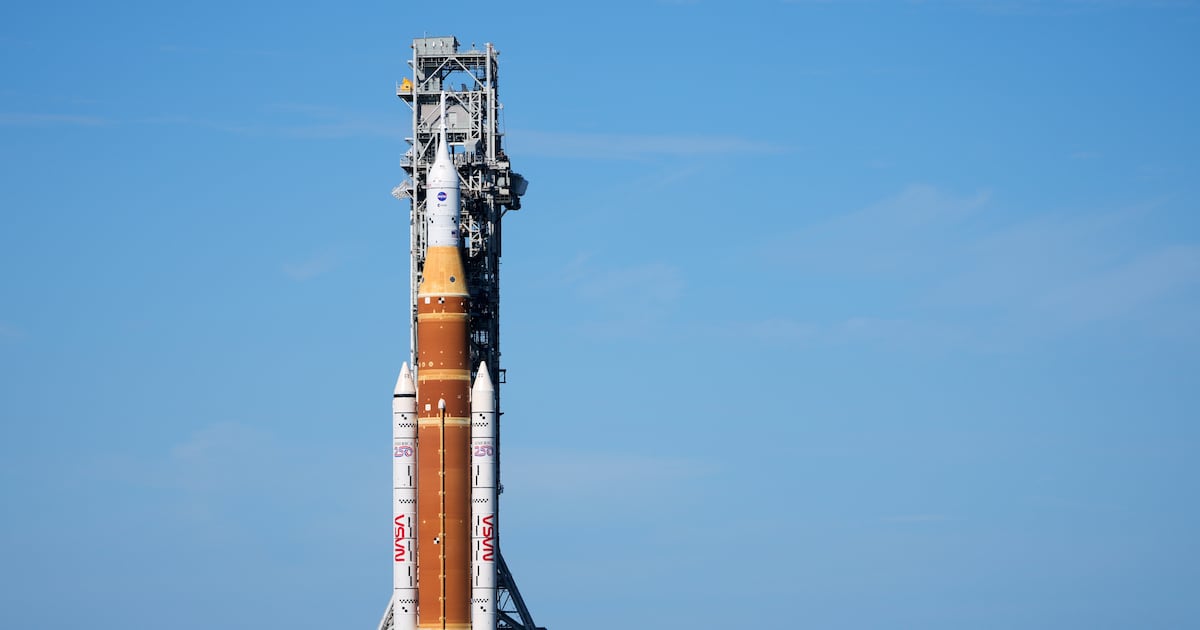
NASA successfully rolled out its Space Launch System (SLS) rocket and Orion spacecraft on Saturday, marking a significant step in preparations for the Artemis 2 mission, the first crewed lunar expedition in over five decades. The rollout from the Vehicle Assembly Building at the Kennedy Space Center in Florida took approximately 12 hours as the massive rocket and spacecraft were transported four miles (6.5 kilometres) to Launch Pad 39B.
The Artemis 2 mission is poised to launch as early as February 6, 2024, carrying three American astronauts—Reid Wiseman, Victor Glover, and Christina Koch—and one Canadian astronaut, Jeremy Hansen. While the crew will not land on the Moon, they will conduct a flyby, orbiting Earth’s satellite for about ten days. This mission represents a pivotal advancement toward the broader goal of returning humans to the lunar surface, a vision initially articulated by former President Donald Trump.
Mission Preparations Underway
John Honeycutt, chair of the Artemis 2 mission management team, expressed enthusiasm during a press conference on Friday, stating, “We’re making history.” The successful rollout allows NASA engineers to begin a series of crucial tests to ensure the SLS rocket’s safety and functionality. Following these assessments, a pre-launch simulation will be conducted, paving the way for the mission’s launch.
The Artemis 1 mission, which was uncrewed, took place in November 2022 after facing multiple delays and two failed launch attempts. NASA’s accelerated timeline for Artemis 2 appears to be a strategic response to international competition, particularly from China’s ambitious lunar plans. China aims to launch its first crewed mission by 2030, while its uncrewed Chang’e 7 mission is slated for 2026, targeting the Moon’s south pole.
Looking Ahead to Future Exploration
The Artemis program is expected to play a crucial role in preparing for future missions to Mars. However, the initiative has encountered numerous delays, prompting concerns about meeting scheduled timelines. The Trump administration’s desire to expedite the Artemis 2 launch has added pressure on NASA to move swiftly in its preparations.
As the mission approaches, astronauts Wiseman, Glover, Koch, and Hansen are eager to embark on this historic journey. “I’m actually pretty pumped to see that,” Hansen remarked, emphasizing the significance of the upcoming flight. Glover added, “We’re swinging for the fence, trying to make the impossible possible.”
While anticipation builds for the Artemis 2 mission, experts caution that further delays could affect future expeditions, including Artemis 3, currently scheduled for 2027. Industry analysts indicate that delays in the delivery of SpaceX’s Starship megarocket could push this timeline back even further.
As NASA continues to advance its Artemis program, the world watches closely, eager to witness the next chapter in human space exploration.

Meta Plans Major Layoffs as AI Costs Surge

Alberta’s Referendum Could Pave Way for U.S. Statehood

Minooka District 201 Plans Enhanced Bilingual Support for Students

Canmore Approves Multiple Development Permits for New Projects

Remembering Bradly Castillo Shearsmith: A Life of Friendship and Joy

BIS Urges Watchdogs to Integrate Synthetic Risk Transfers in Stress Tests

Teva Transforms: Shifting Focus from Generics to Branded Success

Apple Launches AirPods Max 2 with Enhanced Audio Features

Ontario Ends Funding for Seven Supervised Injection Sites

Toyoake City Proposes Daily Two-Hour Smartphone Use Limit

Pedestrian Fatally Injured in Esquimalt Collision on August 14

B.C. Review Reveals Urgent Need for Rare-Disease Drug Reforms

Dark Adventure Game “Bye Sweet Carole” Set for October Release

Konami Revives Iconic Metal Gear Solid Delta Ahead of Release

Victoria’s Pop-Up Shop Shines Light on B.C.’s Wolf Cull

Jimmy Lai’s Defense Challenges Charges Under National Security Law

Snapmaker U1 Color 3D Printer Redefines Speed and Sustainability

Apple Expands Self-Service Repair Program to Canada
-
 Science11 months ago
Toyoake City Proposes Daily Two-Hour Smartphone Use Limit
-
 Top Stories11 months ago
Pedestrian Fatally Injured in Esquimalt Collision on August 14
-
 Health11 months ago
B.C. Review Reveals Urgent Need for Rare-Disease Drug Reforms
-
 Technology11 months ago
Dark Adventure Game “Bye Sweet Carole” Set for October Release
-
 Technology11 months ago
Konami Revives Iconic Metal Gear Solid Delta Ahead of Release
-
 Lifestyle11 months ago
Victoria’s Pop-Up Shop Shines Light on B.C.’s Wolf Cull
-
 World11 months ago
Jimmy Lai’s Defense Challenges Charges Under National Security Law
-
 Technology11 months ago
Snapmaker U1 Color 3D Printer Redefines Speed and Sustainability
-
 Technology11 months ago
Apple Expands Self-Service Repair Program to Canada
-

 Technology11 months ago
AION Folding Knife: Redefining EDC Design with Premium Materials
-

 Technology11 months ago
Solve Today’s Wordle Challenge: Hints and Answer for August 19
-

 Business11 months ago
Gordon Murray Automotive Unveils S1 LM and Le Mans GTR at Monterey